Wednesday, December 27, 2023

Superhero Moment: U.S. Army Recruiter Saves Hattiesburg Man in Tragic Car Accident


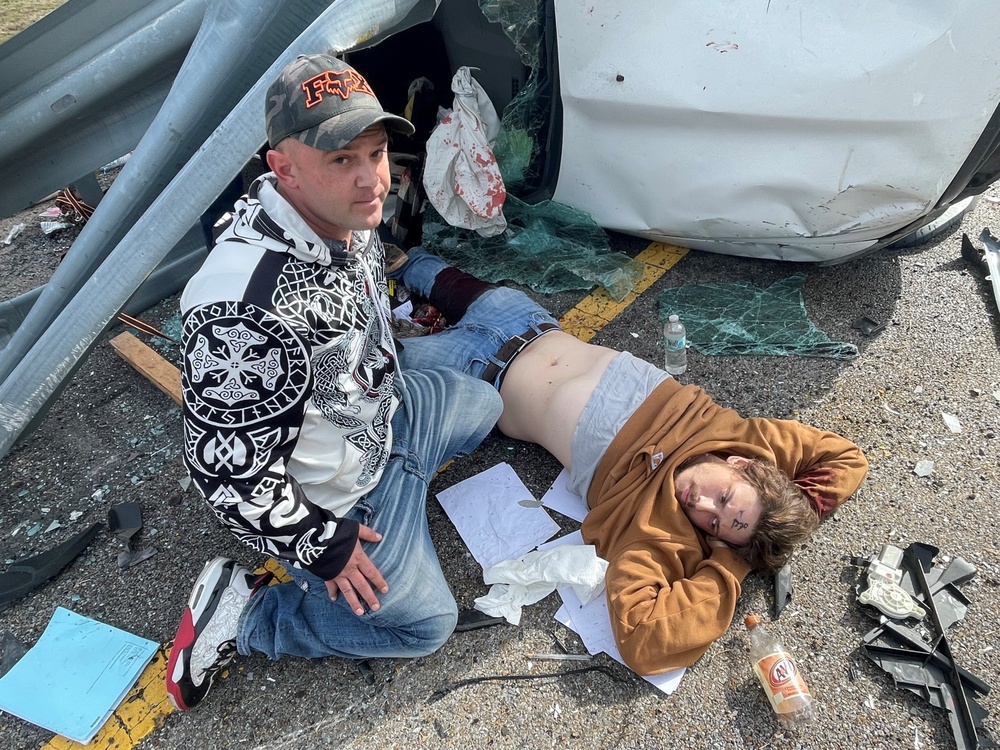
HATTIESBURG, Miss.—— Sgt. 1st Class Corey Engard poses next to Mississippi-native Colton Rogers on-scene of the highway accident after Engard tied proper a torniquet to Rogers’ injury. (Photo Credit - Sgt. 1st Class Corey Engard)

HATTIESBURG , MS, UNITED STATES

12.18.2023

Story by Jonathan Holloway 

U.S. Army Recruiting Battalion - Baton Rouge  

HATTIESBURG, Miss. — — Recently, where fatality was certain, U.S. Army Recruiter Sgt. 1st Class Corey Engard saved the life, and changed destiny, of a local Hattiesburg man after witnessing a vehicle flipped and mangled on a highway guardrail.

“I was dangling from the seatbelt with all my body weight held up by the seatbelt, trying to reach for my pocketknife to cut myself loose,” Rogers said.

Engard pulled Rogers, the trapped 22-year-old, Stone High School graduate from twisted metal that was once a functional vehicle.

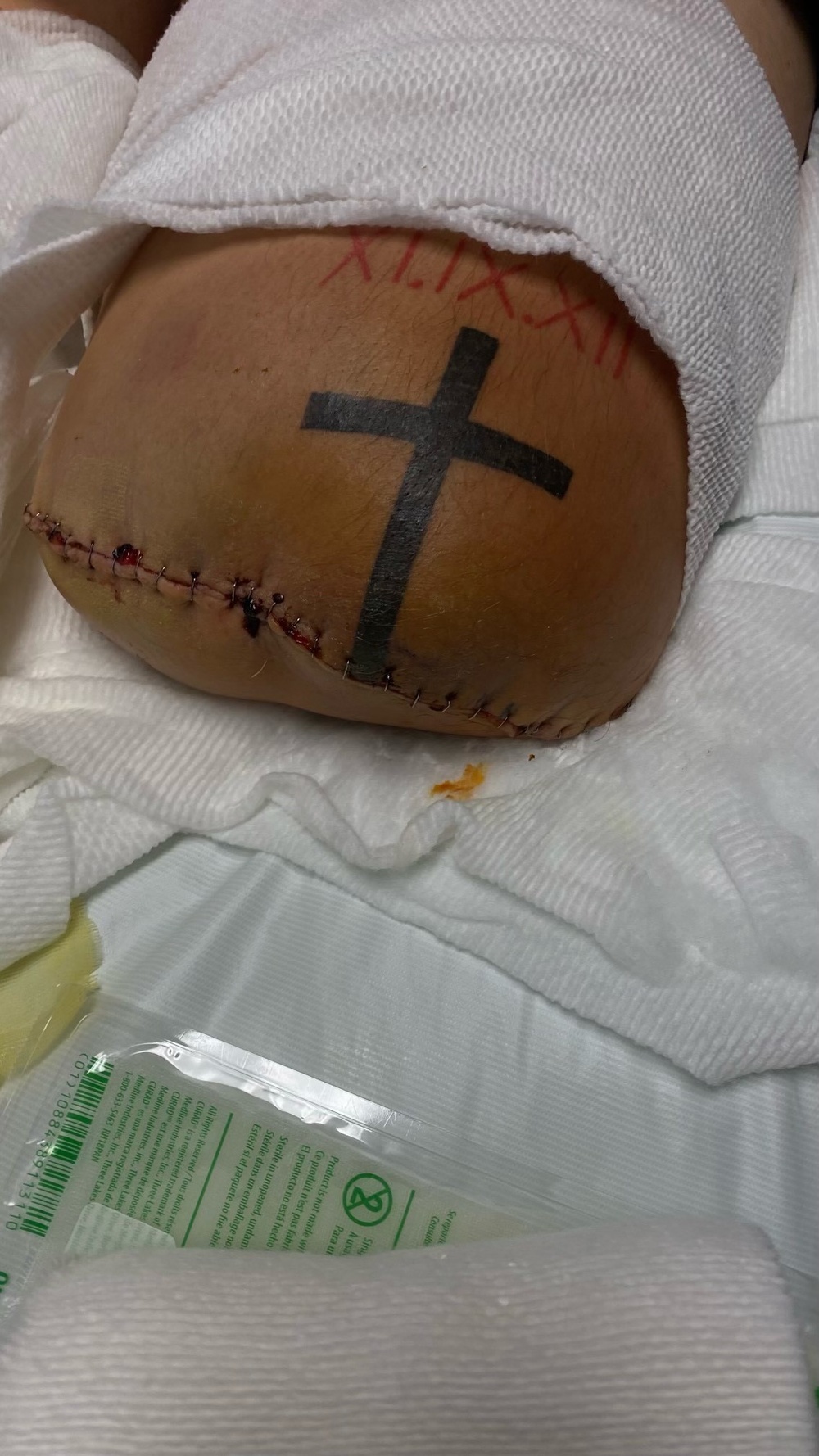
Still in shock, Engard quickly noticed large metal shards had severed Rogers’ left leg from the knee down.

“I was headed to a farewell luncheon and awards ceremony for our recruiting company when I saw the accident,” Engard said. “He was clearly in shock and unaware of what was happening, no aid was on-scene, and I knew I needed to act fast.”

Blood and panic poured onto the scene of the accident according to Engard, but he remained calm relying on his Combat Life Saver Training, given to Army Soldiers throughout their career starting in Advanced Individual Training.

“When I saw him [Engard], I knew I had a chance to stay alive, I was bleeding out pretty bad, but I wasn’t going to give up,” Rogers said. “All I could hear other people saying were ‘Oh my God, how are we going to get him out?’”

Short of proper resources, Engard instinctively, and with genius, used his belt as a torniquet to stop massive blood loss ensuing from Rogers’ injury.

“Once I managed to pull him from the vehicle, the screaming and panicking really started to set in…he was in pain and scared,” Engard said. “I immediately went into ‘Soldier mode’ talking him through the situation, treating his injury and telling him to put his mind in another place but don’t fall asleep because he in shock.”

While applying the improvised torniquet, Engard simultaneously contacted 9-1-1 himself.

“I was shocked to realize that no bystander near the accident had attempted to contact emergency services,” Engard said.

Engard asked on-site bystanders for an apparatus to tighten the belt (as a torniquet) and firmly secured Rogers’ blood loss.

“I let him [Rogers] know I would need to use the apparatus to tighten the belt,” Engard said. “I told him ‘I am going to turn this three times and it’s going to hurt’ …and it did.”

Engard maintained phone contact and gave directions to paramedics until they arrived, but his job still was incomplete; paramedics also arrived in slight dismay after witnessing the traumatic scene.

“The paramedics arrived and saw his [Rogers] injury and seemed to be just as stunned…threw me a pair of scissors and asked that I cut off his jeans,” Engard said.

Engard seemed to take full control of the scene of the accident, applying a proper torniquets supplied by paramedics, even demanding they immediately drive Rogers to the hospital instead of helicopter transport as paramedics originally planned.

“I asked how long the helicopter transport would take to arrive and was told 40 minutes,” Engard said. “I knew that wasn’t enough time and urged them, really insisting, they drive him to the hospital right in that moment.”

Engard’s leadership skills and brave action made the difference between life and death.

“He took charge, did everything right …he saved my life, and I couldn’t be more thankful,” Rogers said. “He was the one calm through the whole situation, he took care of me.”

Safely, Rogers was successfully transported to Anderson Regional Medical Center’s Critical Care Unit (CCU) in Meridian, Mississippi.

Rogers lost four pints of blood and was subject to life support for three days.

Rogers is overjoyed and expresses the utmost thanks for Engard’s compassion and fast acting skills as an Army Soldier, but Rogers’ mother, ¬Kisha Beach, has her own reasons for praises to Engard.

“I spoke with Engard on the phone and had to fight back my words because everything in me screamed ‘I love you, I love you, I love you’,” Beach said. “I saw the photos of others just standing, staring, on their phone taking photos, but not him…many of God’s people were there but he [Engard] let God’s-work flow through him and saved the life of my only son.”

According to Engard, he is honored to have served the Hattiesburg community, where he recruits, in a more meaningful and fulfilling way.

“Meeting him outside of the accident was nice, he is a respectful man; if he wasn’t there, I would have died,” Rogers said.

Currently, Rogers is experiencing a speedy recovery and reaching a point of normalcy post-accident.

“I am in good spirits and recovery has been a piece of cake,” Rogers said. “I was released a week early from physical rehabilitation because I could perform ahead of schedule.”

Rogers, his mother and Engard are planning a holiday dinner marking the beginning of a lifelong friendship that started with an Army Soldier, using his training, and saving the life of a young man who deserved to live.
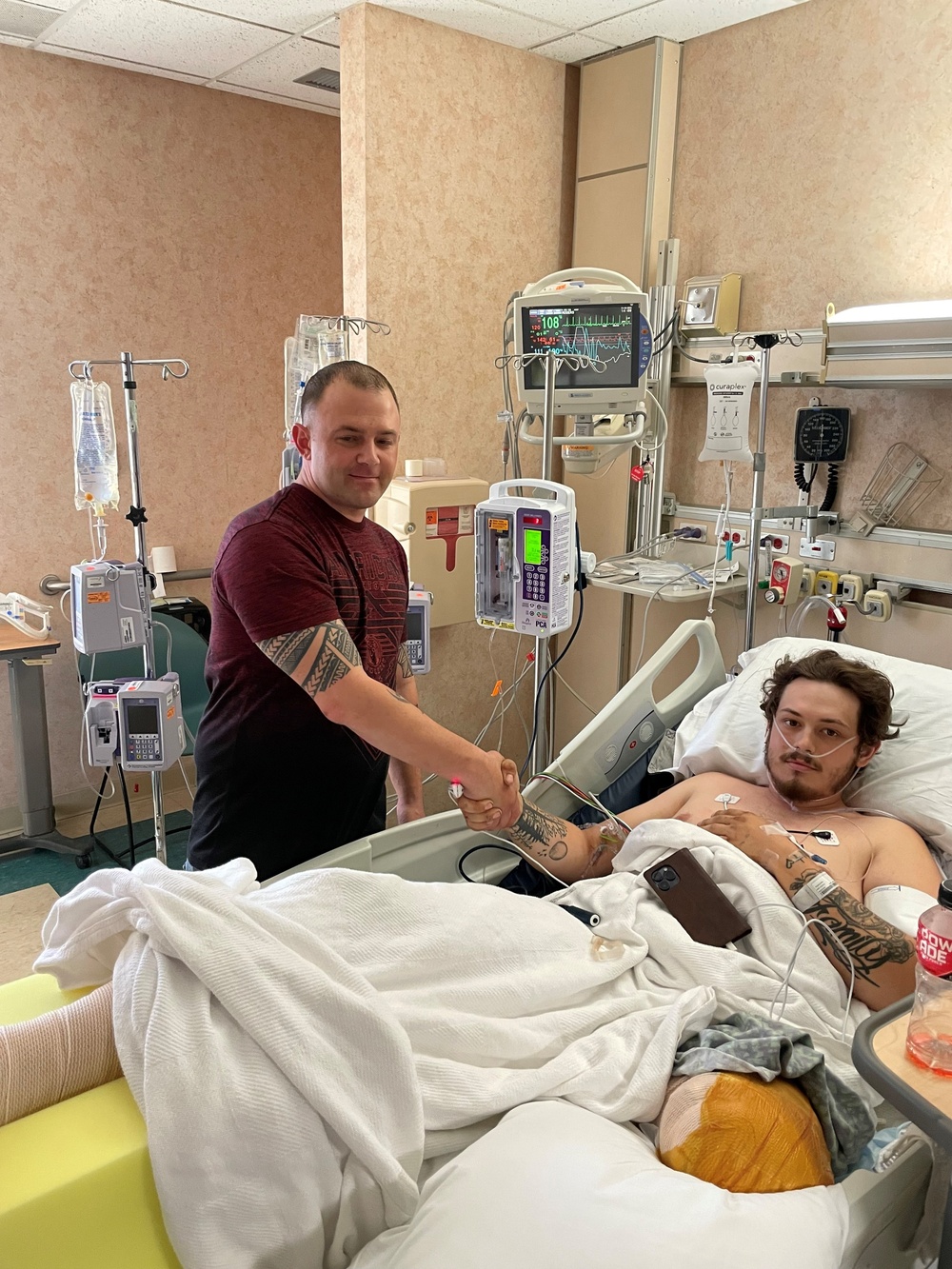
HATTIESBURG, Miss.—— U.S. Army Sgt. 1st Class Corey Engard and Colton Rogers shake hands during a visit to Anderson Regional Medical Center – Critical Care Unit (CCU) is Meridian, Miss. (Photo Credit - Sgt. 1st Class Corey Engard)
HATTIESBURG, Miss. -- Mississippi-native Colton Rogers shows his life-threatening injury resulting from a tragic car accident where U.S. Army Sgt. 1st Class Corey Engard used his Combat Life Saver Training to mitigate massive blood loss. (Photo Credit - Sgt. 1st Class Corey Engard)


WRAIR’s Aquatics Lab Helps Identify Potential Sepsis Drug Candidates

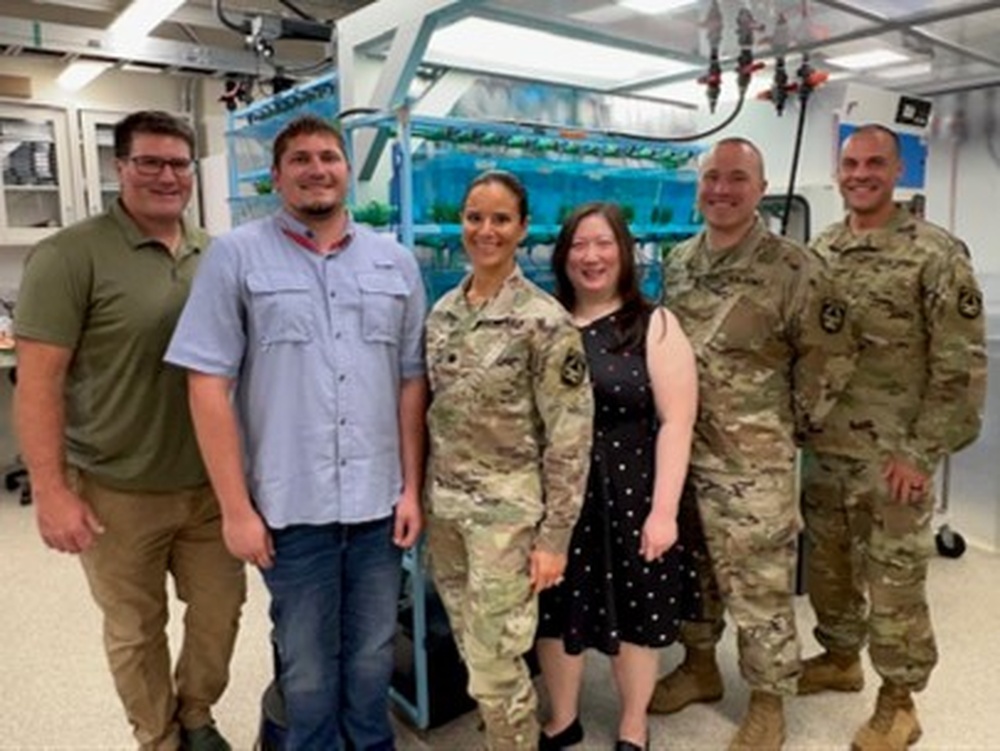
Researchers at the U.S. Army Medical Research and Development Command’s Walter Reed Army Institute of Research, Experimental Therapeutics Branch, recently succeeded in screening more than 600 drugs in only four months to help identify new medicines capable of preventing sepsis, a life-threatening complication of combat wound infections.


http://dlvr.it/T0gFWd

175th Wing Fire Department helps rescue local man from frigid water

 BOWLEYS QUARTERS, MD, UNITED STATES

12.08.2023

Story by Master Sgt. Christopher Schepers 

175th WG - Maryland Air National Guard  

Maryland Air National Guard firefighters teamed up with the Baltimore County Fire Department to rescue a man who fell into frigid water in a community near Martin State Air National Guard Base, December 1, 2023.

The 175th Wing fire department responded to a call for mutual aid at a pier at Safe Harbor Marina in Bowleys Quarters, Md., at approximately 1:23 a.m. early Saturday morning. Upon arrival at the scene, a 65-year-old man was found in the water clinging to a ladder. The man was hypothermic with an altered level of consciousness.

In response, BCoFD Station 21 deployed rescue swimmers and the 175th Wing firefighters donned personal floatation devices before entering the water to assist in the extraction of the victim. The firefighters and rescue swimmers were able to get the man onto a backboard, lift him onto nearby boat, and then utilized the boat’s ladder as a cantilever to hoist the man onto the pier.

The 175th Wing firefighters initiated and maintained patient care until the man could be transferred to BCoFD Medic 54, which then transported him to the hospital.

“Saving a life is the most important and rewarding part of a career in emergency services,” said Jason Hearne, 175th Wing Fire Department fire chief. “Nobody ever calls the fire department when they are having a good day; we are called in someone’s moment of crisis. We can be counted on to bring calm to a chaotic situation. Our 175th Fire and Emergency Services fire fighters did exactly what they train to do and helped save someone’s life, and as a fire chief I could not be more proud.”

The firefighters of the 175th Wing belong to an organization that is an all-hazards agency that responds to, on average, approximately 250 emergencies per year on Martin State Air National Guard Base and the non-military airfield at Martin State Airport. They also have a mutual-aid agreement with local fire stations that allows them to respond to, on average, approximately 250 mutual-agreement calls per year in the local community.

“The 175th Fire and Emergency Services provide the Baltimore County Fire Department a highly trained and well equipped 24-hour staffed fire station possessing additional fire apparatus to better serve the citizens of the Middle River and Bowley’s Quarters communities,” said Hearne. “Most importantly, these communities are primarily served by volunteer fire companies. The 175th is uniquely positioned to bring additional staff and resources to greatly enhance incident safety and successful outcomes by complementing the dedicated local volunteer firefighters.”

To maintain peak readiness, the 175th firefighters routinely train with their mutual-aid partners and maintain training standards that are required by the Department of Defense and U.S. Air Force. At the time of the response to this mutual-aid call, the members of the 175th Fire Department who were not on a scheduled shift participated in Operation Frosty Strike, a four-day readiness exercise at Martin State Airport.

According to Hearne, the all-hazards agency training in many skill sets is “the bedrock to safe and effective delivery of emergency services” as his firefighters undergo hundreds of hours of certification training and continuing education.

As long as a federal flying mission remains at Martin State Airport, the 175th Wing will be able to maintain their “highly skilled and experienced” firefighting capabilities, said Maryland Air National Guard Col. Richard Hunt, 175th Wing commander. He continued, “we want to continue serving the citizens in this community just as we have done for over 100 years.”

“The premium that our team puts on advanced training to keep our members prepared for any situation is something that our community can be proud of,” said Hunt. “Whether our firefighters are responding to an incident on base or in the local community, they are well-prepared and dedicated to providing our community with expeditious and professional emergency services support.”

Exercise Fighting Wyvern: Simulated F-16 Crash

AVIANO AIR BASE, ITALY

12.13.2023

Photo by Senior Airman Noah Sudolcan 

31st Fighter Wing Public Affairs  

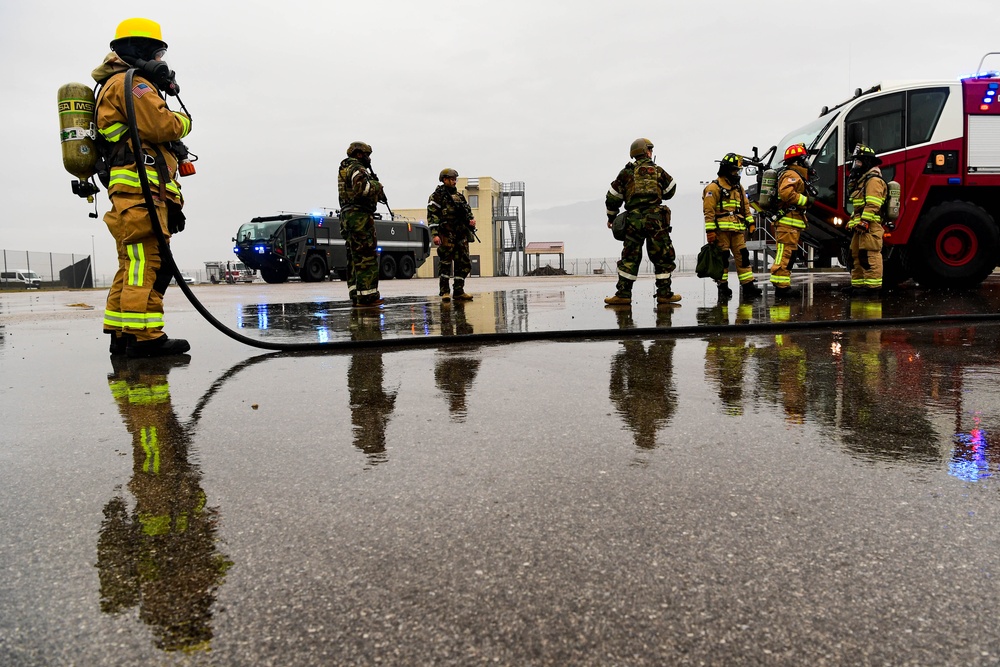
U.S. Fire Fighters assigned to the 31st Civil Engineer Squadron participate in a simulated F-16 Fighting Falcon crash during Exercise Fighting Wyvern 23-02 at Aviano Air Base, Italy, Dec. 13, 2023. The simulation demonstrated the base’s ability to quickly react and respond to potential emergency situations. (U.S. Air Force photo by Senior Airman Noah Sudolcan)

Agile Combat Employment is a concept introduced to improve the survivability of air power through dispersal by using proactive and reactive maneuvers. ACE maintains the ability to fulfill air tasking order requirements based on the mission sets from joint force commanders.

“The concept is nothing new,” said Dr. Sandeep Mulgund, senior advisor to the Deputy Chief of Staff for Operations of the U.S. Air Force. “It’s as old as warfare itself.”

Proactive maneuvers are recognizing situations developing in advance threats and making decisions based on national or combatant command guidance to array forces in an advantageous way. Reactive maneuvers are responding to scenarios as they unfold.

Exercising ACE concepts ensures the U.S. Air Force operates in a modern combat environment. Aviano Air Base demonstrates this ability during exercises like Fighting Wyvern. The exercise operated in response to and within a contested, degraded and operationally limited environment while concurrently executing integrated and joint base defense operations with Slovenia and Italy. Fighting Wyvern 23-02 was the first time the 31st Fighter Wing operated ACE jointly with the 56th and 57th Rescue Squadrons, 606 Air Control Squadron and the 510th Fighter Squadron.

Dr. Mulgund spoke on the importance of integrating with NATO allies and partners into the decision-making process for new capabilities and better interoperating approach concepts.

“Humans tend to learn much more from challenges,” said Dr. Mulgund. “It's when you struggle with something, it's when you have to work through certain pop ups, unexpected challenges, whether its broken equipment, weather related, insufficient equipment or not having worked through some requirements in terms of coordination with a host nation. That's where we learn things.”

U.S. Air Force Col. Joseph Stangl, 31st Maintenance Group commander, expressed the goal of the exercise is to learn as many lessons as possible and to not only work out material solutions but also test Airmen’s ability to problem solve in a more realistic environment.

“ACE in my words is a cultural change, it’s a change in how we employ our combat capability,” said Stangl. “Not just from a material perspective but also from our airmen’s capability perspective. We need a culture of think, execute and communicate.”

ACE utilizes partner nation air bases as alternate operating sites advancing power projection capabilities.

“We have to think about how we maintain the effectiveness of generating air power in an environment where we have a smaller footprint,” said Dr. Mulgund. “In World War II we had about 90 overseas bases, now we have roughly 33.”

Dr. Mulgund spoke on the importance of understanding how to incorporate modern technology with ACE, because everything is observable and it’s important to understand how to maintain survivability and effectiveness in a scenario where everybody with a cell phone is posting on social media.

“A key piece is the human element,” said Dr. Mulgund. “It’s not just about each Airmen having different skill sets, it’s about how you build resilient teams.”

ACE exercises like Fighting Wyvern empower Airmen to find creative and innovative solutions that result in a more capable force.

More Photos.

Coast Guard recovers crashed helicopter from Read Island, Alaska

AK, UNITED STATES

12.08.2023

Photo by Petty Officer 2nd Class John Hightower 

U.S. Coast Guard District 17 PADET Anchorage   

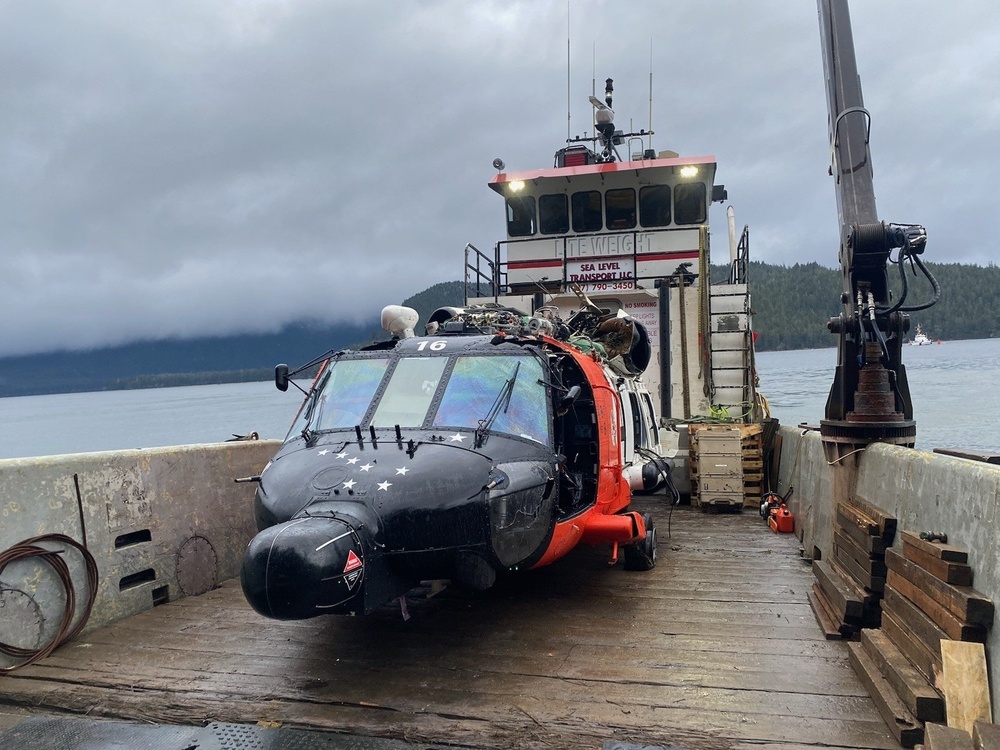
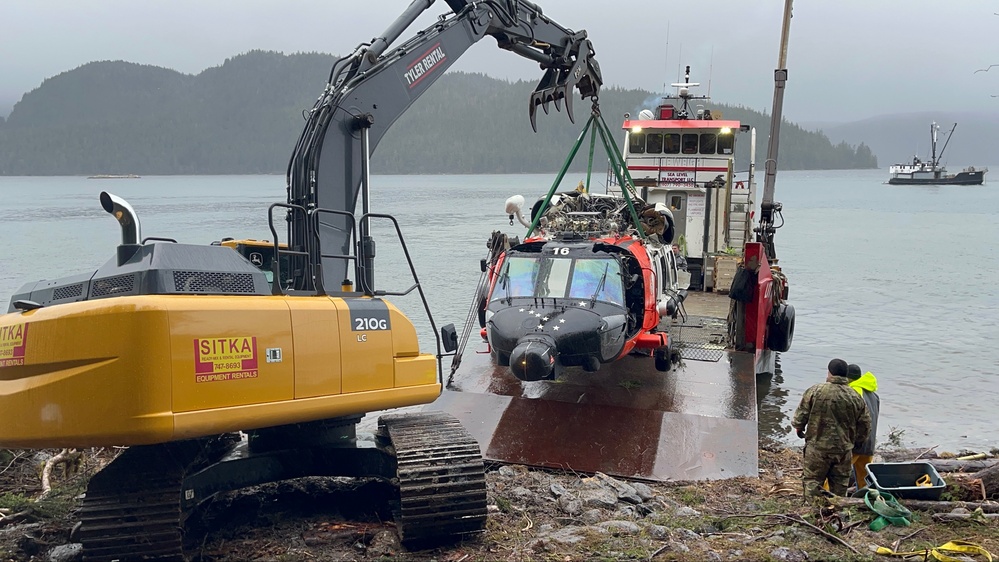
A U.S. Coast Guard MH-60 Jayhawk helicopter from Air Station Sitka sits on a boat after being recovered from the site of a crash near Read Island, Alaska, December 8, 2023. The four crew members involved in the crash on Nov. 13, 2023 all survived. (U.S. Coast Guard photo courtesy of Air Station Sitka.)


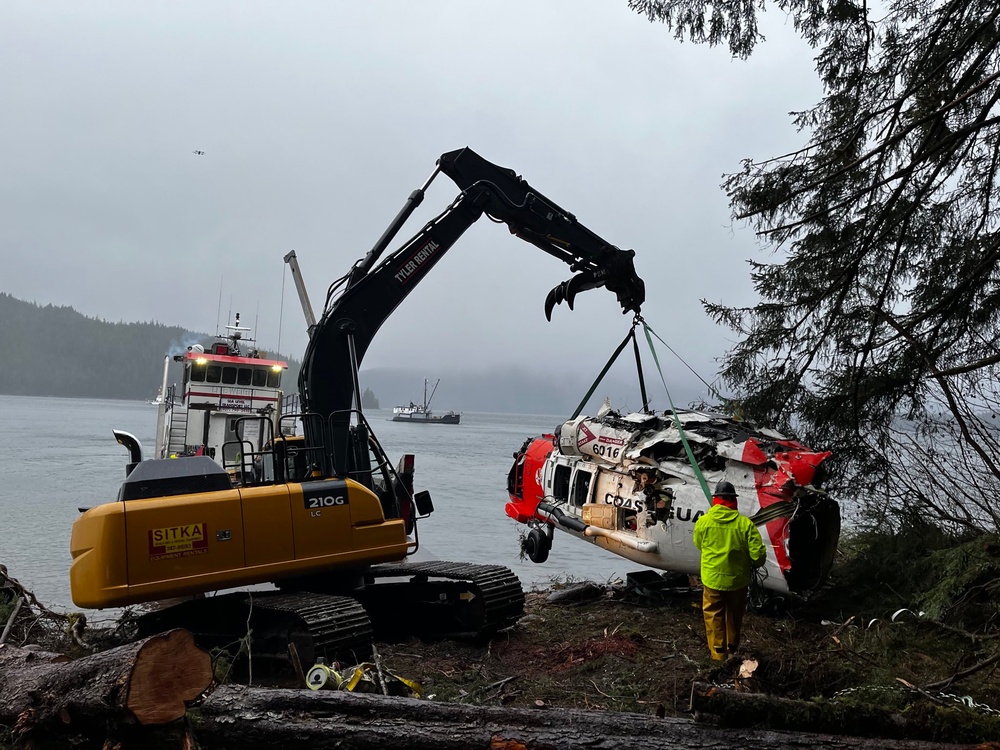
Members of the Downed Aircraft Recovery Team, Delta Company, 1-52 General Support Aviation Battalion, assist personnel from Coast Guard Air Station Sitka in recovering an MH-60 Jayhawk helicopter that crashed on Read Island in southeastern Alaska during a search and rescue mission November 13. (Photo courtesy of DART, 1-52 GSAB)


Most Viewed Articles