Friday, January 12, 2024

New Fire Station Opens at Courthouse Bay


Story by Lance Cpl. Alyssa Deputee January 12, 2024 at 10:48AM A new state-of-the-art fire station opened at Courthouse Bay January 11, marking it as the first of 41 construction projects that comprise the $1.7 billion Hurricane Florence Recovery Program (HFRP). The new firehouse represents a $16.2 million investment that includes six bays and is rated for higher winds to withstand future destructive weather. It also boasts over 15,000 square feet of space, consolidates multiple fire department functions, and includes much-needed training and administrative spaces.

Corporal honored for saving fellow Marine’s life after a hit-and-run

Cpl. Caleb Williams, left, and Lance Cpl. Anahi Anaya pose for a photo after a ceremony on Marine Corps Base Hawaii, Dec. 8, 2023. (Sgt. Jacqueline Parsons/Marine Corps)

Corporal honored for saving fellow Marine’s life after a hit-and-run 

Tuesday, Jan 2

By Irene Loewenson 

Lance Cpl. Anahi Anaya joined the Marine Corps in search of a lifelong sense of family: Once a Marine, always a Marine, the saying goes.

In Cpl. Caleb Williams, who saved her life after she got hit by a car on May 5, Anaya found it.

Williams used his sweatshirt to tie a makeshift tourniquet on Anaya’s leg, and secured the assistance of a bystander and emergency services. And he served as Anaya’s “lifeline,” helping her stay calm through the ordeal.

“We went from strangers to pretty much family after that day,” Anaya told Marine Corps Times in a Dec. 18 interview.

On Dec. 8, Williams, a rifleman with the Hawaii-based 3rd Littoral Combat Team, 3rd Marine Littoral Regiment, received the Navy and Marine Corps Commendation Medal for stepping up to save his fellow Marine’s life.

The evening of May 5, Anaya, an administration clerk with 3rd Marine Littoral Regiment, was riding her motorcycle toward Honolulu with a group of Marines, including Williams.

Williams was newer to riding motorcycles, Anaya said, so she stayed with him at the back of the pack. When Williams experienced a mechanical issue with his bike, the two of them pulled over so Anaya could check it out.

A car whizzed around the bend, and Anaya felt a rush of heat. Then she felt as if someone had poured water on her leg. It was blood.

“This can’t be real,” Anaya recalled thinking.

At Anaya’s urging, he tied it as tightly as he could. It was painful, but she relaxed a little once the tying was over and the bleeding slowed, Anaya said.

“All I could think about was keeping her safe, calm and alert,” Williams said. “I didn’t want her to think the worst while it was all happening. I then pulled my phone out and called 911 to give them our location.”

A civilian bystander pulled over and tried to help, ultimately fetching a real tourniquet from her truck, Anaya said. All the while, Anaya was squeezing Williams’ shoulders like a stress ball, she said.

Despite her loss of blood, Anaya remained conscious and, when an ambulance arrived, was able to tell them what had happened. She was taken to a Honolulu hospital that evening.

About Irene Loewenson

Irene Loewenson is a staff reporter for Marine Corps Times. She joined Military Times as an editorial fellow in August 2022. She is a graduate of Williams College, where she was the editor-in-chief of the student newspaper.

VA plans research on using psychedelics to treat PTSD, depression

Exhibitors display psychedelic products during a Psychedelic Science conference in Denver on June 21, 2023. (David Zalubowski/AP)

VA plans research on using psychedelics to treat PTSD, depression

By Leo Shane III

Veterans Affairs leaders plan to launch new studies on the use of psychedelic compounds to treat post-traumatic stress disorder and depression in veterans, the first such scientific work by the department on the substances since the 1960s.

The move comes amid a growing body of research on the positive impact of compounds like methylenedioxymethamphetamine (MDMA) and psilocybin in helping with mental health issues. However, department officials said that work so far has largely excluded veterans, and more specific investigation is needed into how those alternative treatments may positively or negatively affect them.

“Veterans and VA researchers have told us about the potential promise of psychedelics to treat mental health conditions for some time,” VA Under Secretary for Health Dr. Shereef Elnahal said in a statement released Friday. “Now is our chance to study this potential method of treating veterans with PTSD and major depression across the country.”

Department officials did not say when the new studies will begin or when psychedelics may be approved for broader use in veterans’ mental health care. Friday’s announcement by VA leaders was designed to begin soliciting study proposals from its network of researchers and academic institutions.

VA researchers have already conducted a limited number of studies on psychedelics in federal facilities, but those did not use department funding. The new VA-backed efforts will look at “the effectiveness and safety of using MDMA and psilocybin-augmented psychotherapy in veterans,” according to a department release.

Last September, federal clinicians, scientists and policy makers gathered in Denver to discuss the topic of medical psychedelic use and the potential for integrating them into VA care. Lawmakers have also taken steps in recent months to mandate further study of the compounds’ benefits for troops and veterans, with bipartisan support for the idea.

Language in draft proposals of the annual VA appropriations bill pending before Congress would mandate pilot programs for therapies, including MDMA. As part of the recently passed annual defense authorization bill, Congress required the Defense Department launch new studies this year to analyze the effects of psychedelics on troops suffering from various medical issues.

In a statement, VA Secretary Denis McDonough said the move represents “an important step to explore the efficacy of a potential new set of promising treatments that could improve the health and quality of life for veterans.”

Department officials said that despite the upcoming interest in the potential benefits from psychedelics, veterans should not use them as part of a self-treatment program.

Leo covers Congress, Veterans Affairs and the White House for Military Times. He has covered Washington, D.C. since 2004, focusing on military personnel and veterans policies. His work has earned numerous honors, including a 2009 Polk award, a 2010 National Headliner Award, the IAVA Leadership in Journalism award and the VFW News Media award.

Thursday, January 11, 2024

US, Turkish Airmen conduct first combined CDDAR exercise with TurAF F-16


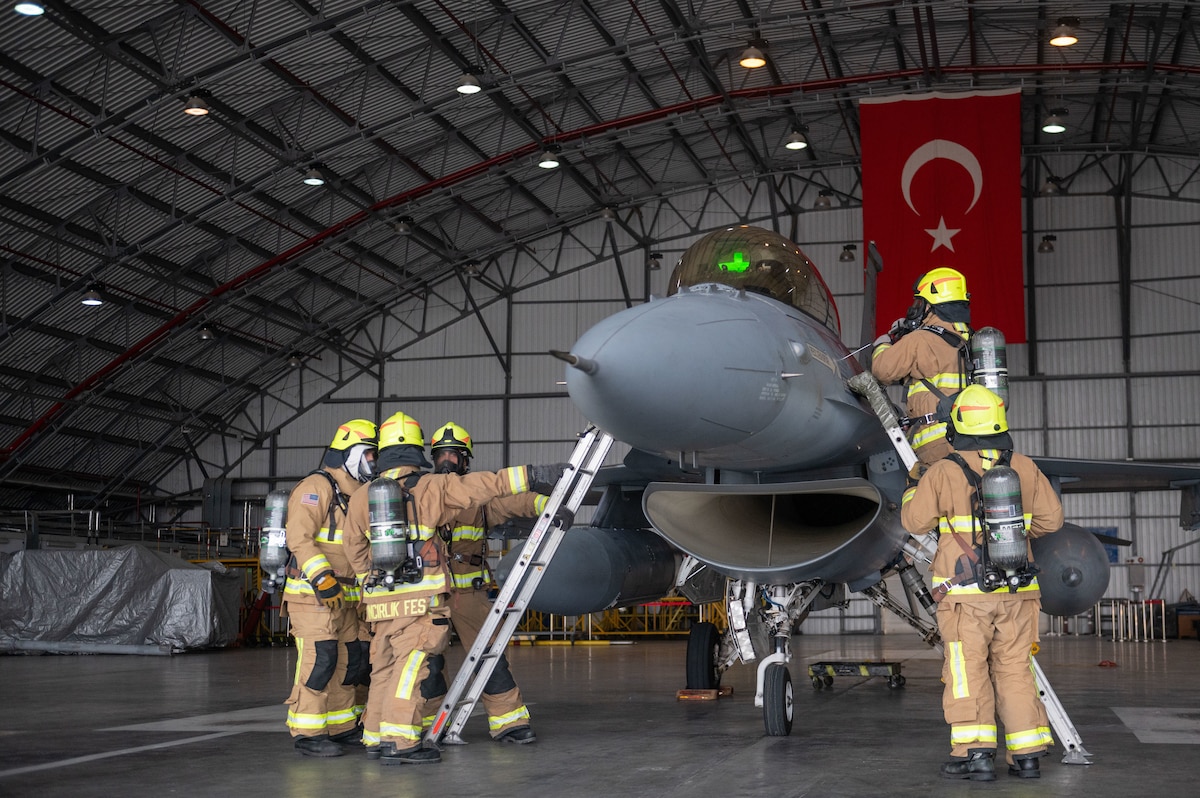
Firefighters assigned to the 39th Civil Engineer Squadron conduct a simulated unconscious pilot rescue operation during a crash, damaged, or disabled aircraft recovery (CDDAR) exercise at Incirlik Air Base, Türkiye, Jan. 8, 2024. This exercise marked the first time 39th Air Base Wing personnel conducted a combined CDDAR training exercise involving a Turkish air force F-16 Fighting Falcon. (U.S. Air Force photo by Senior Airman Renan Arredondo)
Published Jan. 11, 2024
By Senior Airman Renan Arredondo
39th Air Base Wing Public Affairs
INCIRLIK AIR BASE, Türkiye (AFNS) --  

The 39th Maintenance Squadron facilitated the first crash, damaged, or disabled aircraft recovery training exercise with a Turkish air force F-16 Fighting Falcon at Incirlik Air Base, Jan. 8.

The objective of the CDDAR exercise was to test participants’ response to a simulated in-flight emergency which required emergency power unit activation, an incapacitated pilot, and aircraft lift.

“The focus for us was to practice our job in a more realistic situation and improve our working relationships with our partners to see how we are able to help each other,” said U.S. Air Force Master Sgt. Tyler Kurtz, 39th MXS CDDAR team chief. “We are a team here. This hasn't happened in quite some time where we’ve done an exercise together. So, we conducted a smaller exercise to serve as a precursor for the future.”

Turkish air force members assigned to the 10th Tanker Base Command, Airmen assigned to the 39th MXS, firefighters and explosive ordnance disposal Airmen from the 39th Civil Engineer Squadron, and emergency medical services personnel from the 39th Medical Group worked together to respond to the simulated aircraft crash site.

Once first responders inspected the scene and determined it was safe, medical personnel assessed the condition of the Turkish pilot and safely transferred him to an ambulance. The CDDAR team then simulated the use of lift bags to prop the aircraft off the ground, to inspect the aircraft’s undercarriage.

Firefighters assigned to the 39th Civil Engineer Squadron conduct a simulated unconscious pilot rescue operation during a crash, damaged, or disabled aircraft recovery (CDDAR) exercise at Incirlik Air Base, Türkiye, Jan. 8, 2024.

Firefighters assigned to the 39th Civil Engineer Squadron conduct a simulated unconscious pilot rescue operation during a crash, damaged, or disabled aircraft recovery (CDDAR) exercise at Incirlik Air Base, Türkiye, Jan. 8, 2024. Interoperability and shared capabilities are key to Turkish and U.S. military cooperation in their roles to defend NATO’s southern flank. (U.S. Air Force photo by Senior Airman Renan Arredondo)

U.S. Air Force personnel assigned to Incirlik AB routinely work alongside NATO allies for a variety of training scenarios and exercises.


Rapid Intervention Training: A Key to Excellence for MacDill Firefighters


Published Jan. 11, 2024
By Senior Airman Michael Killian
6th Air Refueling Wing

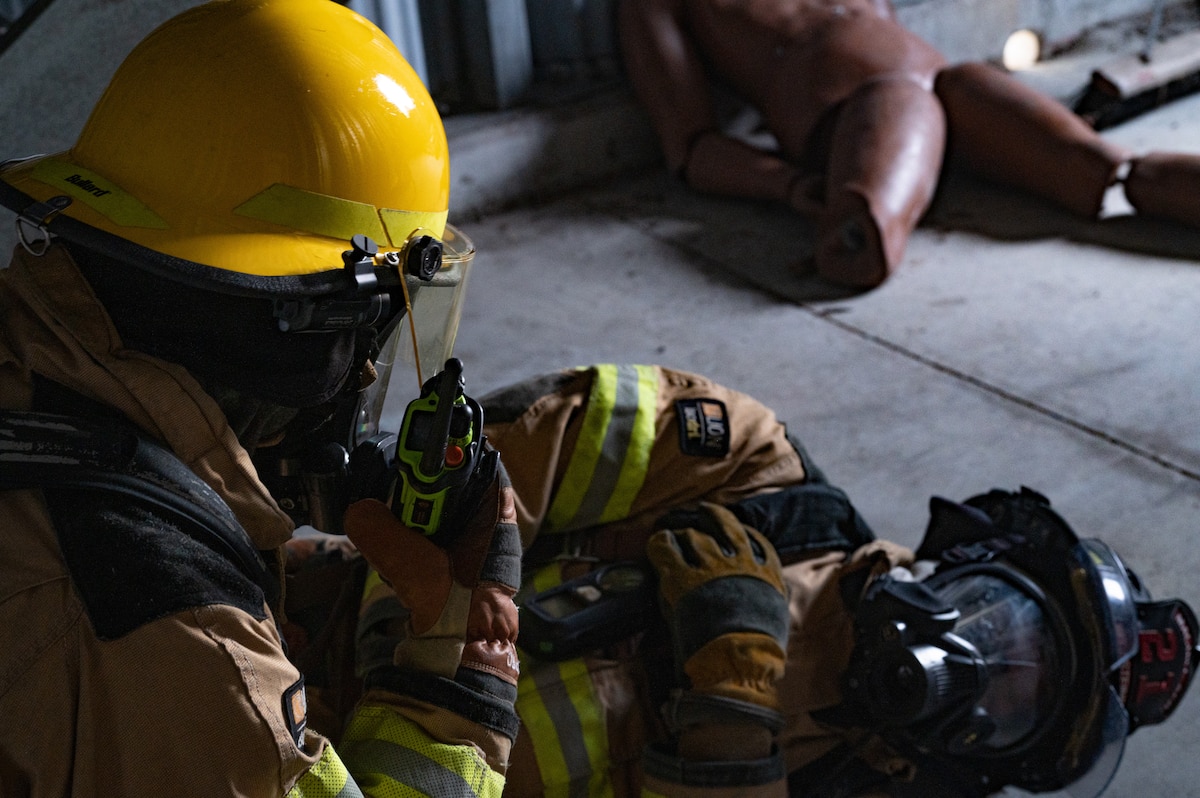
MACDILL AIR FORCE BASE, Fla. The 6th Civil Engineer Squadron's fire department conducts rapid intervention training (RIT) as part of its mission to ensure the highest level of readiness and efficiency when responding to emergencies. This specialized training is a critical component in maintaining the safety and effectiveness of the 6th Air Refueling Wing.

Rapid intervention training focuses on rescuing injured or trapped firefighters during fire emergencies. Air Force Staff Sgt. Hunter Larson, a lead firefighter assigned to the 6th CES, explained the importance of RIT. "It's about being prepared for the worst-case scenarios.” Larsen said. “Our teams practice rigorous scenarios to ensure that if a firefighter is down, we have a quick and effective response mechanism."

In a job where every second counts, RIT emphasizes proficiency in high-pressure situations, and understanding complex situations like structural fires, where visibility is low, and the risk of injury is high.

"Our training prepares us for these intense environments,” Larson said. “We regularly undergo drills that mimic real-life scenarios, ensuring our reactions become second nature."

As a lead firefighter, Larson plays a pivotal role in coordinating the team's response during emergencies. His leadership ensures that his team is well-prepared and equipped to handle residential fires to larger structural emergencies.

"I'm responsible for scene assessment and directing our crew,” Larson said. “RIT reinforces our teamwork and decision-making skills which is crucial in high-stress environments."

The use of advanced equipment, such as the Personal Accountability System (PAS) is an integral part of RIT. This device alerts rescuers to a firefighter’s location if they stop moving for more than 60 seconds.

Nicholas Dunlap, a lead firefighter assigned to the 6th CES explained, "The PAS device is a game-changer. It significantly increases our chances of quickly locating and rescuing a downed firefighter."

The fire department at MacDill is committed to staying up to date on the latest firefighting technology. "Firefighting is an evolving field.” Dunlap remarked. “We continuously update our training to deal with modern materials and fire behavior."

According to Larson, the rigorous training schedule at the fire department prepares firefighters to respond to emergencies immediately noting, "firefighting is physically demanding and pretty stressful. Our daily training and focus on fitness help mitigate risks like cardiac arrest, which is common in high-stress environments."

Thanks to the rigorous training and emphasis on safety, the MacDill fire department boasts an impressive safety record. Dunlap proudly noted, "In my 17 years here, we've not had a firefighter go down during an operation, a testament to our training and preparedness."

The effectiveness of RIT has broader implications for the base's overall mission. "Our readiness directly impacts the safety and operational capacity of the 6th Air Refueling Wing.” Dunlap said. “By ensuring our team is prepared for any eventuality, we contribute to the base's overall mission success."

The rapid intervention training at MacDill Air Force Base exemplifies the 6th CES's fire departments commitment to excellence. Through rigorous training, advanced equipment, and an emphasis on teamwork and leadership, the firefighters at MacDill are well-equipped to handle emergencies, contributing significantly to the accomplishment of the base's mission and priorities.
Most Viewed Articles