Monday, April 15, 2024

Hands-on fire training highlights Wildfire Exchange between Washington National Guard and Royal Thai Army


CAMP MURRAY, WA, UNITED STATES
04.09.2024
Story by Joseph Siemandel  
Joint Force Headquarters - Washington National Guard  

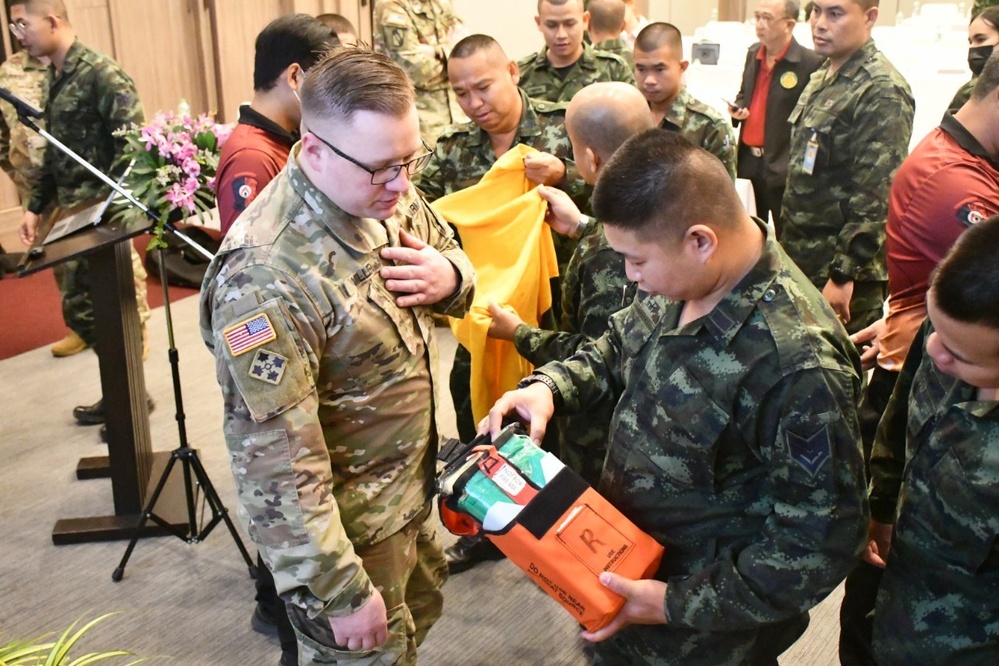
In early April, the Washington National Guard and Royal Thai Army concluded their third and most hands-on wildfire exchange in Chiang Mai, Thailand.

“The wildfire subject matter expert exchange has created a unique opportunity to not only bring together and share information between the Washington National Guard and the Royal Thai Army but also collaborate with the Thai Royal Forestry Division (RFD) and the WA Department of Natural Resources (DNR), the lead agencies for wildfires and forest management in Northern Thailand and Washington State, respectively,” said Col. Amanda Doyle, lead for the wildfire exchange.

Washington state wildfire seasons range from routine to truly historic with an average of more than 240,000 acres burned each year. Wildfire seasons in the Kingdom of Thailand have become more common in the past decade. The peak fire season typically begins in early February and lasts around 13 weeks, ravaging much of the country, including the agriculturally based northern provinces. This common threat is the reason the Washington National Guard and Royal Thai Army brought the idea forward.

“Under the umbrella of the State Partnership Program, the Washington National Guard has continued to develop and refine the concept for the wildfire exchange with the Thai Directorate of Civil Affairs,” said Doyle.

In 2022 the exchange included a virtual fire management, air quality concerns, and public information component, with the opportunity to have RFD experts and DNR specialists discuss wildfire topics relevant to both teams. Last year a group of Washington National Guard members traveled to Chiang Mai, Thailand for a weeklong in-person exchange. The team of experienced Washington National Guard wildland firefighters met with Royal Thai Army Area Three counterparts, as well as the Royal Forestry Department, to discuss firefighting tools and resources available and share best practices for firefighting hand crew organization, tasks and medical evacuation.

“The Guard team for this exchange includes individuals with joint planning and operations experience, focusing on the Washington National Guard strategic approach to wildland firefighting and other domestic response operations, as well as a number of experienced wildland firefighters and paramedics, with innate teaching and coaching abilities,” said Doyle.

This year’s exchange included techniques for employment of U.S. and RTA firefighting tools, to include Pulaskis, McLeods, combis, blowers and rakes. Participants discussed critical firefighting tactics, including hand crew organization and operation, building fire breaks, putting in hand lines, controlling spot fires, mop up operations, and safety and emergency protocols. The group also focused on operational control, management of fires and crews, and resourcing and logistical support.

“Participants in the wildfire exchange spent a day at the RFD firefighter training academy conducting hands-on training on controlled burns, effectively exercising tactics for fire control and fire suppression in a field environment,” said Doyle.


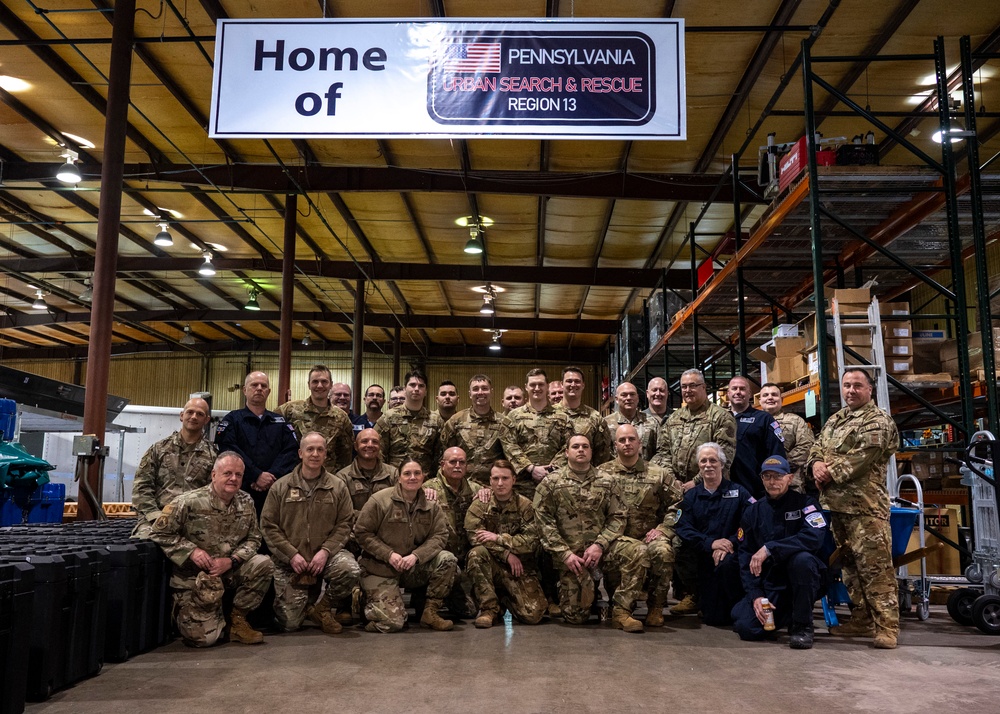
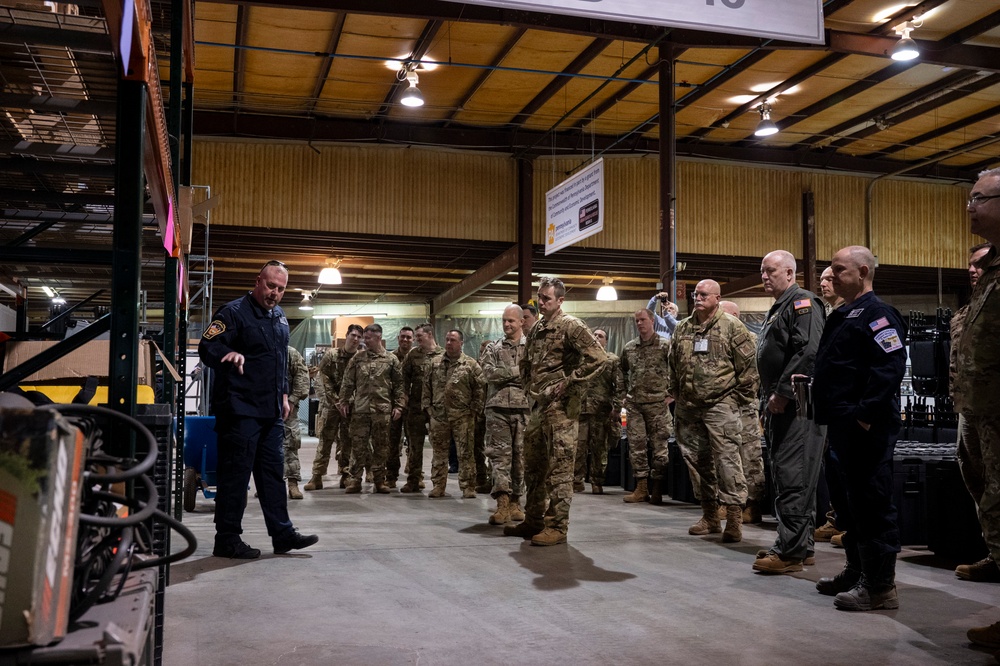
171st Fire Department Teams Up with PA Urban Search and Rescue

CORAOPOLIS, PA, UNITED STATES
04.14.2024
Photo by Staff Sgt. Zoe Wockenfuss 
171st Air Refueling Wing  

The 171st Fire and Emergency Services Flight, 171st Air Refueling Wing, Pennsylvania Air National Guard, tours the Pennsylvania Region 13 Urban Search and Rescue facility April 14, 2024, in Carnegie, Pennsylvania. The 171st is teaming up with the Region 13 task force for training and future joint efforts. (U.S. Air National Guard photo by Tech. Sgt. Zoe M. Wockenfuss)

U.S. Air National Guard photo by Tech. Sgt. Zoe M. Wockenfuss


Sunday, April 14, 2024

SupplyCore Inc. Awarded Fire and Emergency Services Equipment (F&ESE) Contract by Defense Logistics Agency

    SupplyCore is proud to have been awarded a contract for the Fire and Emergency Services Equipment (F&ESE) Tailored Logistics Support (TLS) Prime Vendor program for the U.S. military and federal agencies. This contract, awarded by the Defense Logistics Agency (DLA) Troop Support, Philadelphia, Pennsylvania.

With vast experience in Government & Defense contracting and a deep knowledge of customers’ needs, SupplyCore is a leading supply chain Prime Vendor. For 36 years, we have helped the Department of Defense remain mission-ready both domestically and abroad. We look forward to providing fire and emergency services equipment and support to federal civilian agencies and the military, including the Army, Navy, Air Force, Marine Corps and Coast Guard.

Products supported under this contract include, but are not limited to: hoses, hose fittings, nozzles, tools, fire extinguishers and other extinguishing agents, poles, ladders, rescue equipment, respiratory protective devices, regulators, uniforms, station training gear, turn out gear, first response and search and rescue supplies, decontamination equipment, detection equipment, protective clothing used for hazardous material (HAZMAT) and other emergency scenarios, communication equipment and tools, first responder equipment, training equipment, compressors, emergency egress and protective systems, pumps, generators, and storage, containment, and racking systems.

“Since 1987, SupplyCore has supported our troops worldwide in sustaining readiness,” said Peter Provenzano, President & CEO. “This contract allows us to extend our support through fire and emergency services equipment and meet mission critical requirements of our military and government customers.”

Under DLA’s TLS program, customers can easily and quickly order competitively priced commercial, off-the-shelf, part-numbered items within the scope of the contract to support their mission.

SupplyCore proudly supports the warfighter through various other Defense Logistics Agency Tailored Logistics Support Programs, including the Special Operational Equipment TLS and Metals TLS.


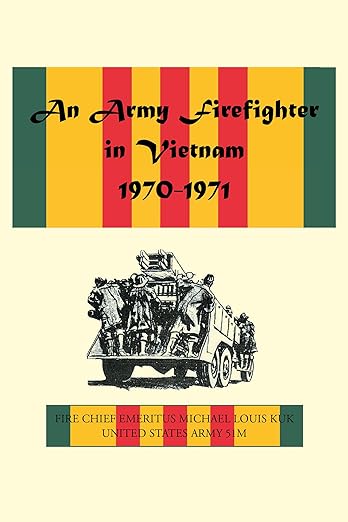
Book: An Army Firefighter in Vietnam 1970-1971


Military history continues to evolve and grow. Every conflict that had American troops on the ground is full of historical notice and activity, and the Vietnam War is no exception.

Chief Michael L. Kuk's writing tells of the time that he spent in Vietnam with the US army as a combat firefighter. This work encompasses what a very small detail of soldier-firefighters did while they were stationed there in support of the overall war effort.

It wasn't a glamourous war-hero position. But it required bravery and courage to face and overcome other hazards the war could present. A misstep would result in serious injury and/or death if these soldier-firefighters did not perform to the highest standard so required.

The events of this book tell his story in a matter-of-fact manner. No Hollywood limelight, just a hard, factual retrospect of young American soldiers doing the right thing at the right time, to save and protect the US military's assets and personnel in a remote part of the world.

The photographs alone tell a more detailed story, as documentation of fire apparatus and their response personnel are rarely captured on film in any theater of war, much less noted at all.

The return of a welcome home for many Vietnam veterans was disgraceful. Finally, America is thankful for their service and sacrifices. Fortunately, many are now sharing their stories about their contribution. This book will tell a new chapter about the Vietnam War and its soldiers.

One has to feel proud that these Vietnam War veterans never forgot their patriotism.

Saturday, April 13, 2024

As JFK grows closer to commissioning, the demand for a crew that is well-trained in damage control techniques also grows. Every Sailor is a firefighter.


UNITED STATES
04.01.2024
Story by Petty Officer 1st Class Jacob Milham 
PCU JOHN F. KENNEDY  

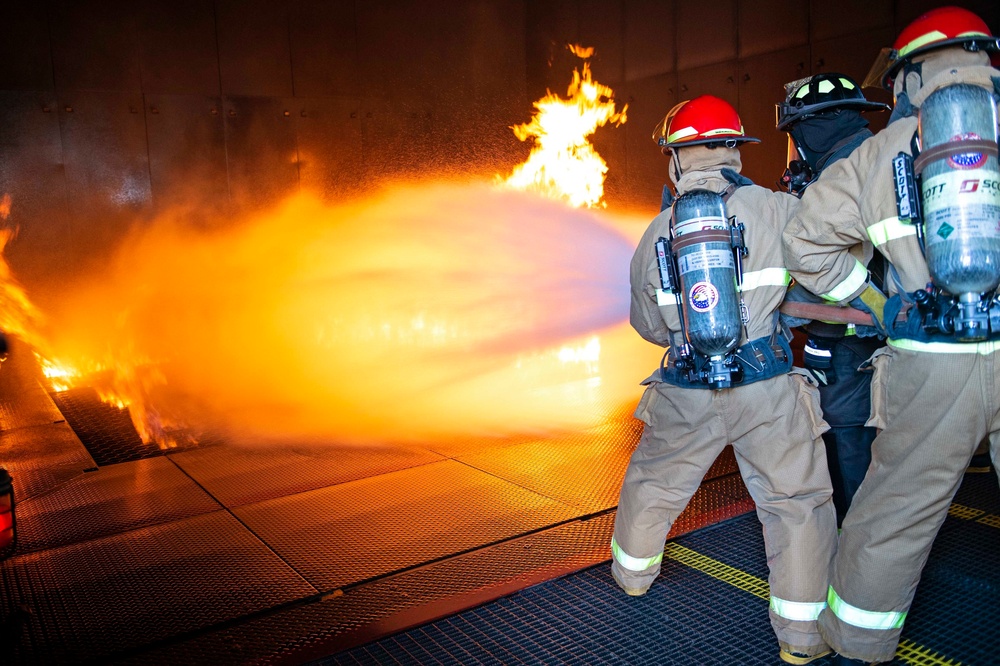
Picture this: the vast expanse of the ocean stretches out before you, the salty breeze tangling your hair as you stand on deck. Suddenly, the ship’s bell pierces the air, and everything changes at that moment. No matter your rate, age, or story before the U.S. Navy, every Sailor could become the difference between saving the ship and losing it. At least, that is how it could happen on a ship underway.

As JFK grows closer to commissioning, the demand for a crew that is well-trained in damage control techniques also grows. Every Sailor is a firefighter.

Firefighting training isn’t just a box to tick, it’s a critical skill set that can mean the difference between life and death, the survival of a ship, and the protection of its crew.

Currently, the firefighting training process on board John F. Kennedy starts the minute a new Sailor checks in. This training pipeline was established four years ago when Sailors began to work aboard John F. Kennedy. Despite not owning firefighting responsibilities or equipment, it was still critical that Sailors knew how to mitigate and identify fires and this laid the foundation for firefighting training aboard the ship.

“At that time, those Sailors were the first line of defense,” said Damage Controlman 1st Class Elizabeth Griffin. “It was different [from a commissioned vessel] because it wasn’t them or myself putting on gear and fighting the fire. But, we wanted them to know the basics.”

Griffin’s work years ago, on training and qualification programs, helped create a strong culture of a damage control mindset aboard John F. Kennedy. Currently, the training department helps schedule Sailors for Basic and Advanced Firefighting courses, taught in Norfolk, Virginia.

Griffin pointed to the near future, where more Sailors will work aboard John F. Kennedy and the crew takes more and more ownership of the ship.

“From the beginning, leadership really emphasized the need for damage control,” said Griffin. “It is crazy to see how this has grown in my time here, but making sure Sailors know what they are doing is the most important part.”

But it’s not just about individual readiness - it’s about the seamless integration of every Sailor into a cohesive team. Training not only enhances the Navy’s firefighting capabilities and efficiency but also fosters a culture of preparedness and camaraderie among Sailors.

Perhaps most importantly, firefighting training is about more than just putting out fires; it’s about preventing them in the first place. Chief Warrant Officer 3 Tabitha Hodge, John F. Kennedy’s fire marshal, stressed how Sailors’ vigilance fights fires before they start.

“Ninety percent of the work is prevention,” said Hodge. “We are all doing something right if there isn’t a fire to fight. Having pride in the ship, a keen eye, and being proactive will all prevent the worst case scenario, another [USS] Bonhomme Richard [(LHD 6)].” That 2020 fire lasted four days and is a stark reminder of everyone’s role in fire prevention.

“Everybody has to learn damage control and firefighting,” said Griffin. “You’re not too good to learn fire mitigation. Even if you’re not an engineering rate, you might be the person who is the difference between life or death.”

For more information or to schedule training, send your inquiries to training2@cvnit.navy.mil.


Most Viewed Articles