Monday, April 22, 2024

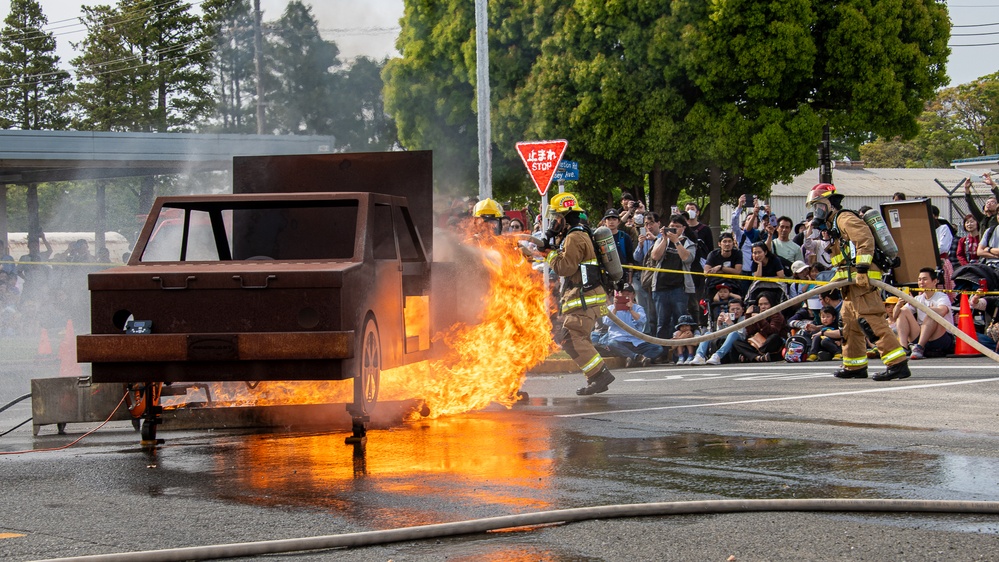
Firefighters hold a live-fire demonstration on Naval Air Facility (NAF) Atsugi during the Spring Fest Friendship Festival April 20, 2024.


JAPAN
04.20.2024
Photo by Petty Officer 2nd Class Henry Liu 
Naval Air Facility Atsugi  

240420-N-OG286-1641 AYASE, Japan (April. 20, 2024) – Firefighters hold a live-fire demonstration on Naval Air Facility (NAF) Atsugi during the Spring Fest Friendship Festival April 20, 2024. During this open base event, Sailors, JMSDF members, and both the NAF Atsugi and the local community outside the gate enjoyed aircraft static-displays, live music, food vendors, and a variety of performances all in celebration of the enduring partnership between the U.S. and Japan. (U.S. Navy photo by Mass Communication Specialist 2nd Class Henry Liu)

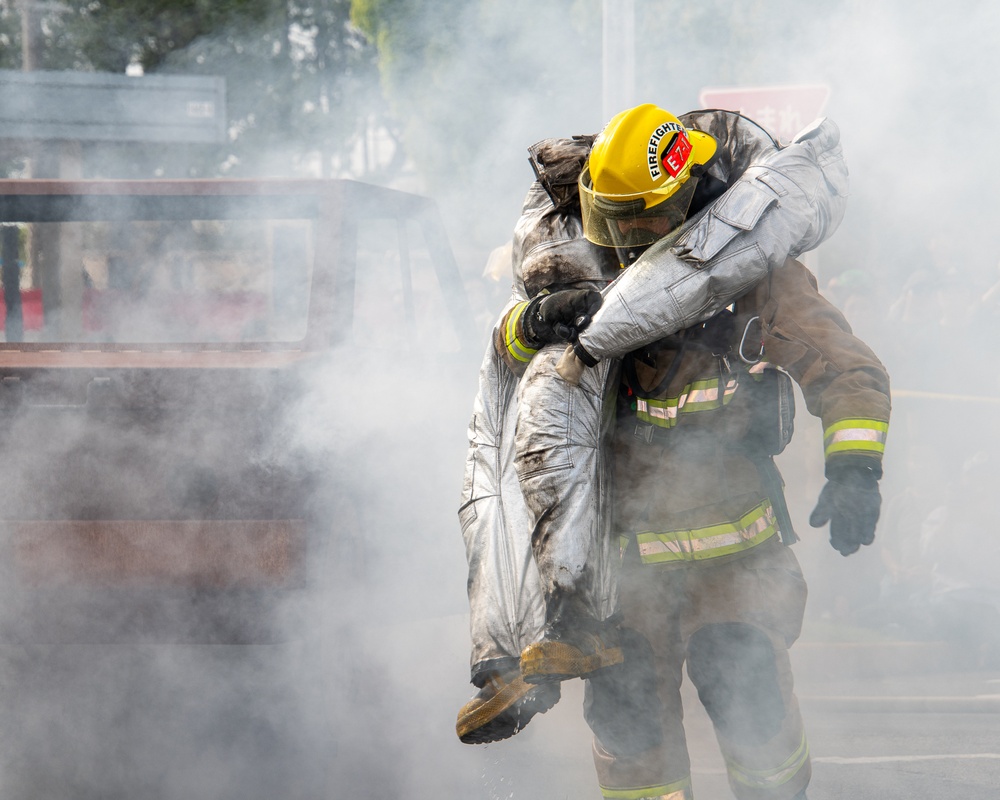
 Firefighter rescues a dummy in a live-fire demonstration on Naval Air Facility (NAF) Atsugi during the Spring Fest Friendship Festival April 20, 2024. During this open base event, Sailors, JMSDF members, and both the NAF Atsugi and the local community outside the gate enjoyed aircraft static-displays, live music, food vendors, and a variety of performances all in celebration of the enduring partnership between the U.S. and Japan. (U.S. Navy photo by Mass Communication Specialist 2nd Class Henry Liu)


Sunday, April 21, 2024

758th Engineers urban search and rescue training exercise.

MUSCATATUCK URBAN TRAINING CENTER, IN, UNITED STATES
04.20.2024
Photo by Sgt. 1st Class Dalton Smith 
354th Mobile Public Affairs Detachment  

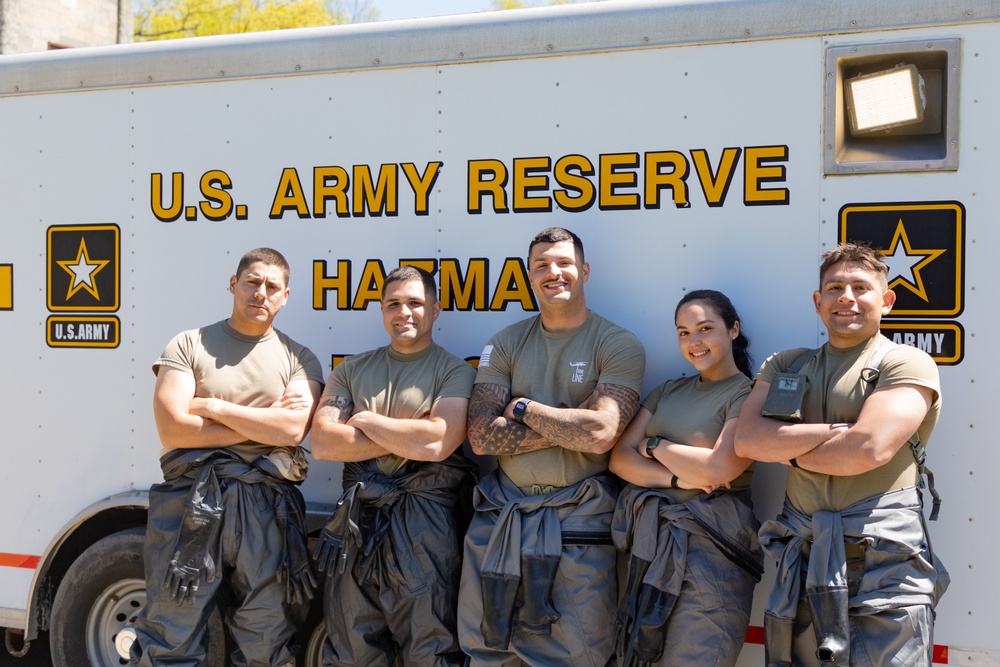
U.S. Army Reserve Soldiers with the 758th Engineer Company, based out of Miami, Florida, pose after an urban search and rescue training exercise during Guardian Response 2024 (GR24) at the Muscatatuck Urban Training Center (MUTC), Indiana, on April 19, 2024.
Guardian Response is a multicomponent exercise which validates the ability of units to conduct chemical, biological, radiological, nuclear (CBRN) response missions. Soldiers are evaluated on their capability to conduct search and rescue operations, patient evacuation, provide medical care and civilian decontamination. 78th Training Division Soldiers plan, coordinate and evaluate the units the tough, realistic training environment. After the units are validated they are ready to conduct domestic CBRN response missions.

(U.S. Army Reserve photo by Sgt.1st Class Dalton Smith)

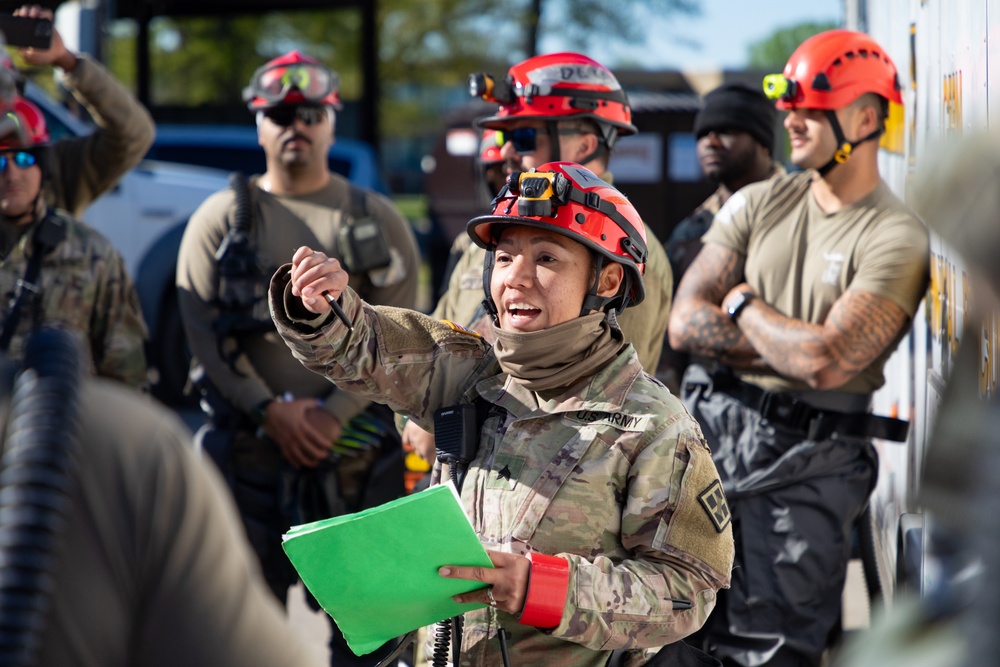
A U.S. Army Reserve Soldier with the 758th Engineer Company, based out of Miami, Florida, prepares Soldiers with a briefing for an urban search and rescue training exercise during Guardian Response 2024 (GR24) at the Muscatatuck Urban Training Center (MUTC), Indiana, on April 19, 2024.

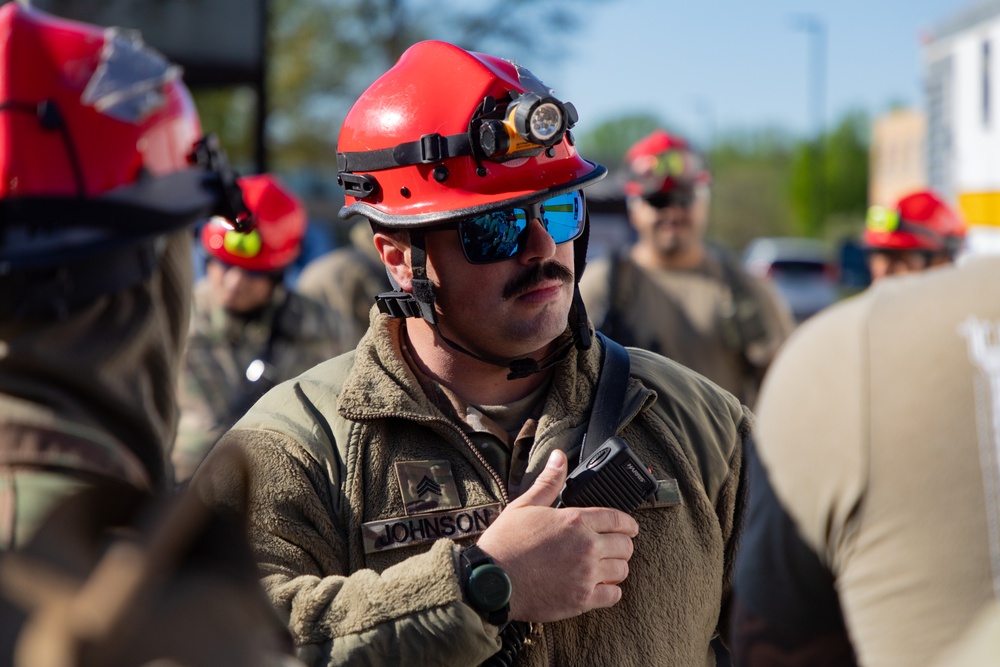
Sgt. Andrew Johnson, a Chemical, Biological, Radiological, and Nuclear (CBRN) personnel records specialist with the 758th Engineer Company, based out of Miami, Florida, communicates instructions over his radio for an urban search and rescue training exercise during Guardian Response 2024 (GR24) at the Muscatatuck Urban Training Center (MUTC), Indiana, on April 19, 2024.


Senators put pressure on the VA to fix problems with vets’ toxic exposure claims

By Leo Shane III
Tuesday, Apr 16

A group of Senate Democrats is imploring Veterans Affairs officials to fix how they handle constrictive bronchiolitis and hypertension claims under new toxic exposure benefits legislation, saying that too many veterans are left without help due to confusing department rules.

In a letter to VA Secretary Denis McDonough on Monday, 18 senators — led by Senate Veterans’ Affairs Committee Chairman Jon Tester, D-Mont. — said the issues need to be addressed quickly to ensure that thousands of veterans receive the compensation they deserve.

“Veterans have waited decades for benefits and recognitions for health conditions related to their toxic exposure,” the group wrote. “Outdated VA regulations should not deny them earned benefits.”

The problem relates to the PACT Act, legislation passed in 2022 which dramatically expanded veterans’ eligibility for disability benefits related to injuries from military toxins like chemical defoliants and burn pit smoke.

Over the last 20 months, the department has accepted nearly 900,000 claims under the legislation, an approval rate of about 75%. But individuals filing claims related to constrictive bronchiolitis or hypertension continue to struggle to navigate the system.

During testimony before the House Appropriations Committee on Tuesday, McDonough acknowledged a significant number of “0%, service-connected ratings” for veterans dealing with hypertension and said officials are looking into the issue.

Such ratings create an official record of a health issue in a veterans file but not not make them eligible for any compensation. Higher disability ratings can result in hundreds or thousands of dollars a month in financial support.

Senators said that advocates have told them that many hypertension claims are being rated as 0% or non-disabling because individuals are already managing the condition through prescriptions or other medical care.

“VA’s regulations require all hypertension diagnoses to be confirmed by readings taken two or more times on at least three different days,” they wrote. “Requiring veterans to locate blood readings from decades ago — or worse, incentivizing them to go off their medications — to prove they still have hypertension is overburdensome and dangerous.”

Veterans submitting constrictive bronchiolitis claims face a similar but separate problem. The respiratory illness is difficult to diagnose without an invasive procedure, and VA rules prohibit combining ratings from that condition with other respiratory problems. The result is often an effective 0% rating for that issue, despite the breathing problems it causes.

Earlier this month, Under Secretary for Benefits Joshua Jacobs told PBS that officials are working on a fix for the constrictive bronchiolitis, but it may take until this fall.

In their letter, the senators said they want action sooner.

After Tuesday’s hearing, McDonough said that officials are looking into the concerns outlined in the letter but may need legislative action to help address them, particularly when it comes to the constrictive bronchiolitis issues.


2 Japanese Navy Helicopters Crash in the Pacific Ocean During Training, Leaving 1 Dead and 7 Missing

Saturday’s training only involved the Japanese navy and was not part of a multinational exercise, defense officials said.


http://dlvr.it/T5pZ1T

Saturday, April 20, 2024

A child playing thought he’d found a rock — it was actually a Marine’s jawbone

 
Photo of Capt. Yager in the Palmyra Spectator newspaper Dec. 20, 1944. (Ramapo College IGG Center)

By Claire Barrett
 Wednesday, Apr 17

A human jawbone discovered in the Arizona desert was recently identified as remains of U.S. Marine Corps Capt. Everett Leland Yager.

The issue? No one knew it was missing.

The 30-year-old World War II veteran was killed in July 1951 during a military training exercise over the skies of Riverside County, California. His remains were returned to his family and he was buried in his home state of Missouri.

Decades passed until a child, looking to build upon his rock collection, came across the unusual “stone” while scavenging in Yavapai County, Arizona.

Pocketed and taken home, the remains of Yager were swiftly turned over to the Yavapai County Sheriff’s Office where it became known as “Rock Collection John Doe” until January 2023.

That’s when, according to a press release from Rampo College of New Jersey, the “Yavapai County Medical Examiner referred the case to the Ramapo College of New Jersey Investigative Genetic Genealogy (IGG) Center.”

With the assistance of the University of North Texas Center for Human Identification and Intermountain Forensics in Salt Lake City, a profile was developed last May and “uploaded to a portal supporting police and forensic teams with investigative comparisons, and FamilyTreeDNA, a Houston-based genetic testing company,” according to the Arizona news outlet AZ Family.

The researchers identified Yager as the most likely candidate for Rock Collection John Doe, and last month a sample taken from Yager’s daughter confirmed that the jawbone did in fact belong to her long-deceased father.

As to how Yager’s remains came to rest in Arizona? The team of investigators theorize that a scavenger bird picked up the bone sometime after the crash and carried it east.

Now, 73 years after his death, plans are being arranged to return Yager’s full remains to his family.

On sale now,  Stainless steel tumbler with different variations to choose from. 


Most Viewed Articles