Sunday, April 28, 2024

Tyndall answers CSAF’s Call for Change amidst Great Power Competition

 
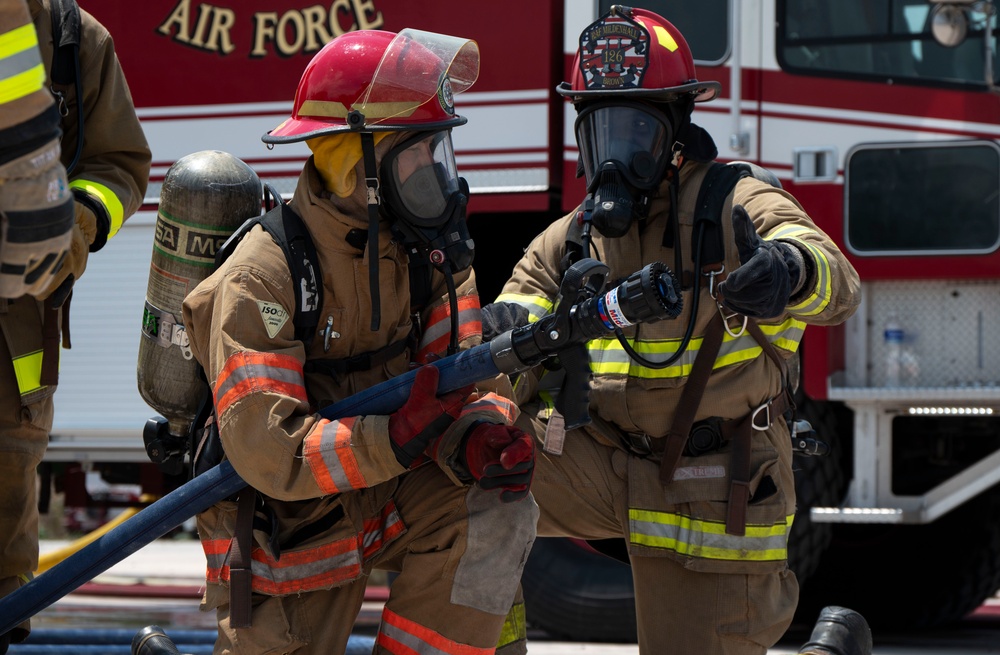
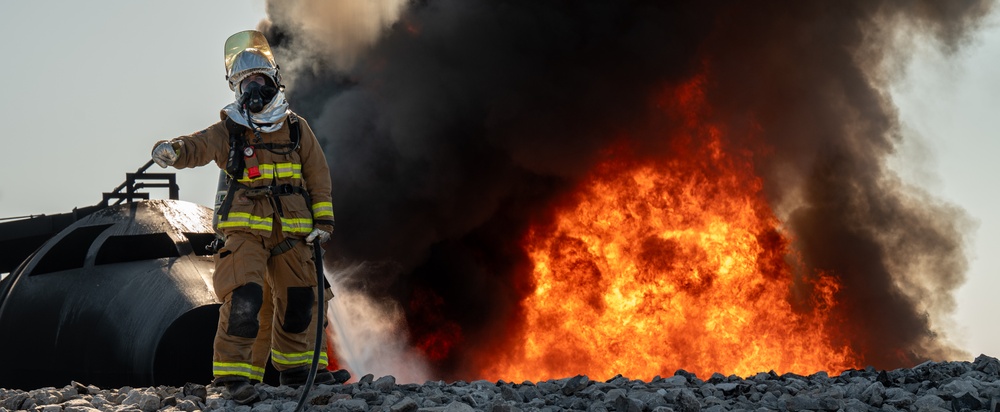
Firefighters conduct an aircraft fire training exercise during Readiness Challenge X at Tyndall Air Force Base, Florida, April 25, 2024. Allvin toured the Silver Flag training site, where the Readiness Challenge tests civil engineers from across the globe on their ability to execute critical operations in a simulated contested environment. (U.S. Air Force photo by Senior Airman Zachary Nordheim)

TYNDALL AIR FORCE BASE, FL, UNITED STATES
04.25.2024
Story by Senior Airman Zachary Nordheim 
325th Fighter Wing  

Air Force Chief of Staff Gen. David Allvin, his spouse Gina, and Chief Master Sergeant of the Air Force David Flosi visited Tyndall Air Force Base, Florida, April 25, to speak with Airmen and witness firsthand the strides made in response to the imperative Case for Change initiative.

While visiting, Allvin and Flosi voiced a deep appreciation for the hard work and resilience of the Airmen, families and local civic leaders of Team Tyndall, who have truly embraced the Installation of the Future performance expectations. Additionally, Mrs. Allvin met with Tyndall spouses while visiting the newly constructed Child Development Center and thrift shop to experience Team Tyndall’s commitment to the families who support Air Force readiness.
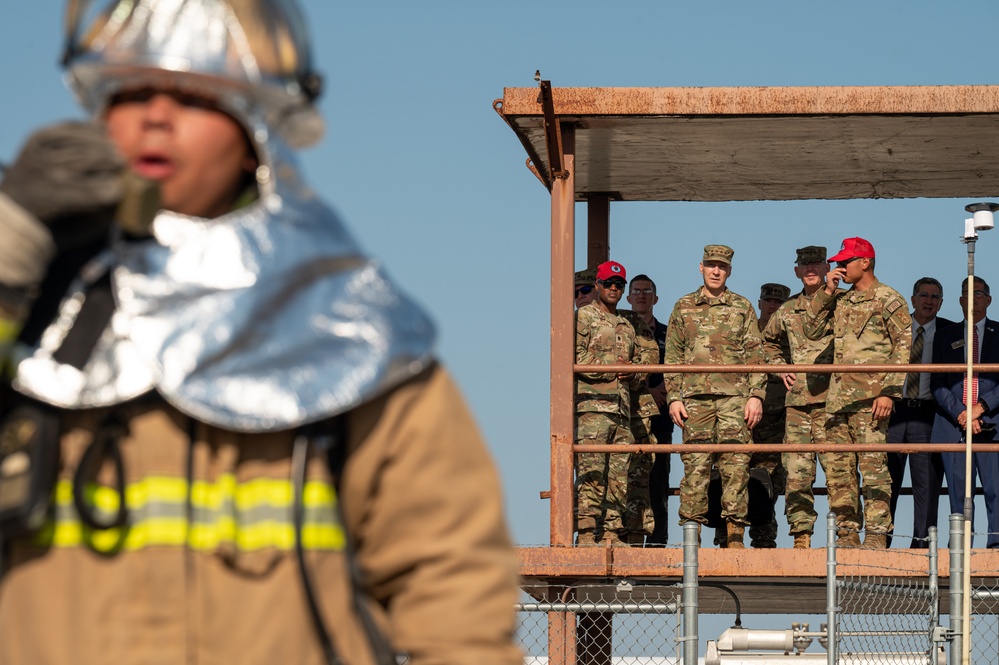
Air Force Chief of Staff Gen. David Allvin, centered, watches firefighters during Readiness Challenge X at Tyndall Air Force Base, Florida, April 25, 2024. Allvin toured the Silver Flag training site, where the Readiness Challenge tests civil engineers from across the globe on their ability to execute critical operations in a simulated contested environment. (U.S. Air Force photo by Senior Airman Zachary Nordheim)

“I want to say that coming here to this wing, to this base, to this installation and seeing the Airmen getting after it makes me feel motivated,” said Allvin. “You’re in a special place right now in a very, very consequential time, and I want you to own that.”

Tyndall is currently undergoing a sweeping reconstruction effort aimed at aligning its capabilities with the demands of Great Power Competition. The Department of Defense restructured the 325th Fighter Wing to cultivate and sustain combat-ready, deployable forces in accordance with the Air Force Force Generation model.

“Gen. Allvin and I are here to serve you,” said Flosi. “We are at the exploit phase of our careers, which means we’re going to make every day count toward taking care of you and your families.”

Throughout the trip, Allvin outlined the Case for Change foundational pillars crucial for reoptimizing the Air Force while underscoring Tyndall's strategic significance.
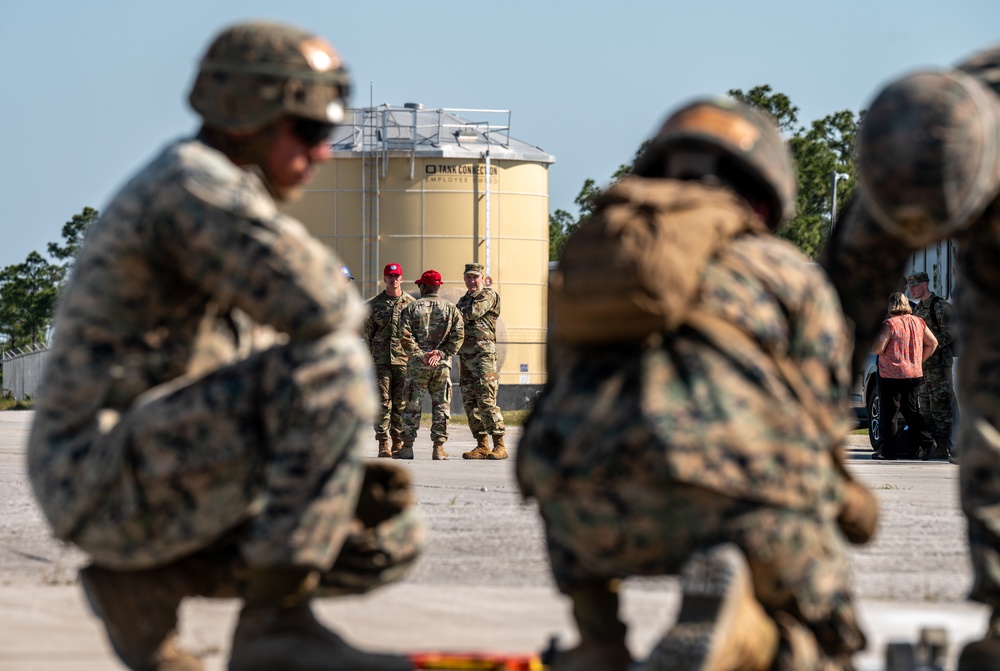
Air Force Chief of Staff Gen. David Allvin, centered, observes U.S. Marines from the Marine Wing Support Squadron (MWSS) 172 install a mobile aircraft arresting system during Readiness Challenge X at Tyndall Air Force Base, Florida, April 25, 2024. Allvin toured the Silver Flag training site, where the Readiness Challenge tests civil engineers from across the globe on their ability to execute critical operations in a simulated contested environment. (U.S. Air Force photo by Senior Airman Zachary Nordheim)

Allvin and Flosi emphasized the indispensable role played by Tyndall, owed to its strategic positioning and unparalleled access to the Gulf Range Complex, spanning an expansive 180,000 square miles over the Gulf of Mexico. Overall, Tyndall provides a crucial training area for maintaining mission readiness, air-to-air training exercises, advanced weapons testing and projection to become the Air Force’s newest operational fighter wing with three F-35A Lightning II squadrons.

The visit also coincided with the Air Force Civil Engineer Center’s Readiness Challenge X; a capstone event designed to stress-test the readiness of Air Force civil engineers to execute critical operations in a contested environment. During the challenge, Allvin had the opportunity to utilize the Recovery of Airbase Denied by Ordnance (RADBO) system, an 18-ton vehicle equipped with a three-kilowatt Zeus III laser used to detonate explosives such as bombs, grenades and improvised munitions on airfields in a deployed or austere locations.
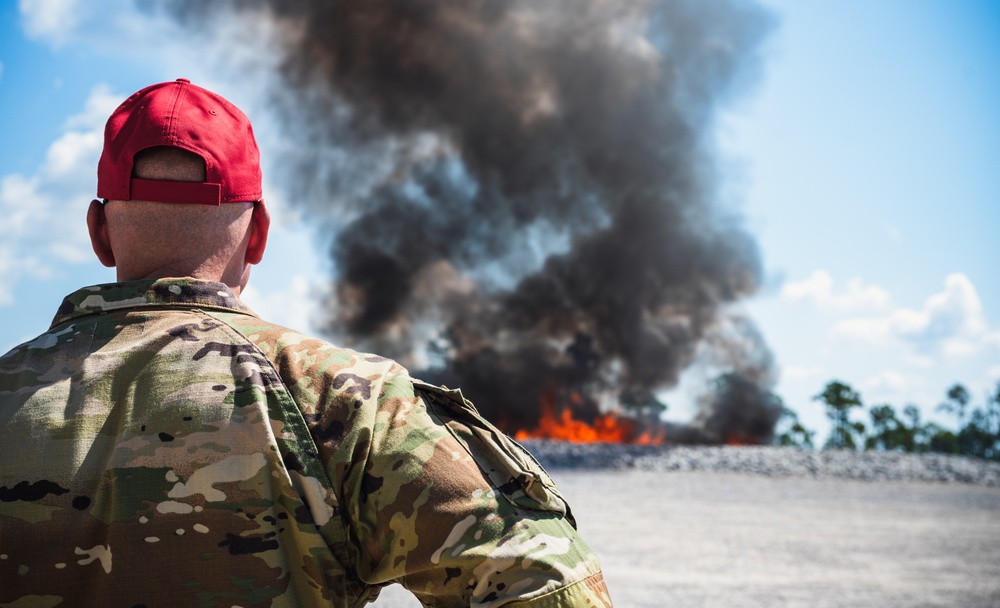
Chief Master Sergeant of the Air Force David Flosi observes a fire response training during Readiness Challenge X at Tyndall Air Force Base, Florida, April 25, 2024. Flosi toured the Silver Flag training site, where the Readiness Challenge tests civil engineers from across the globe on their ability to execute critical operations in a simulated contested environment. (U.S. Air Force photo by Airman 1st Class Zeeshan Naeem)

“As I was watching this Readiness Challenge, I couldn’t have been more fired up,” said Allvin. “Those teams are competing for the things that we need to do with the mindset of deploying as wings [in potential austere locations]— generating combat power, disaggregating to different bases for survival or re-aggregating for effect. These scheme of maneuvers the Air Force is going to do is what you are doing here with the Readiness Challenge. What we need to do now is make sure we do that across the Air Force and change the way that we present forces in the deployable combat wings and train together as a team.”

The visit gave a comprehensive glimpse into Tyndall’s multifaceted missions and evolving capabilities. It also served as an example of how modernized infrastructure effectively meets present and future mission demands, echoing the DoD’s call for military modernization.

“It’s been great being here at Tyndall. It reminds me of why I get up every day,” said Allvin. “As I look at the Airmen in this wing, it really provides context to what we say [about optimizing for Great Power Competition]. When I try to visualize what we want a fully deployable combat to look like, feel like, even shaped like, you can definitely see the 325th Fighter Wing is well postured for that.”


ASAN, Guam JRM Fire Academy Graduation


GUAM
04.24.2024
Photo by Shaina Marie ONeal 
Joint Region Marianas  

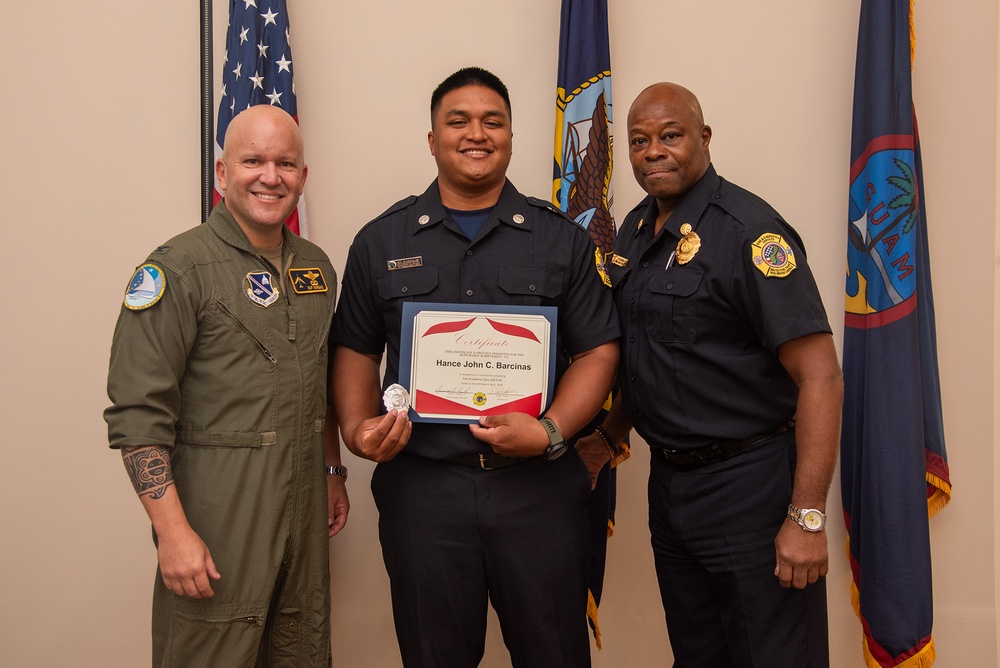
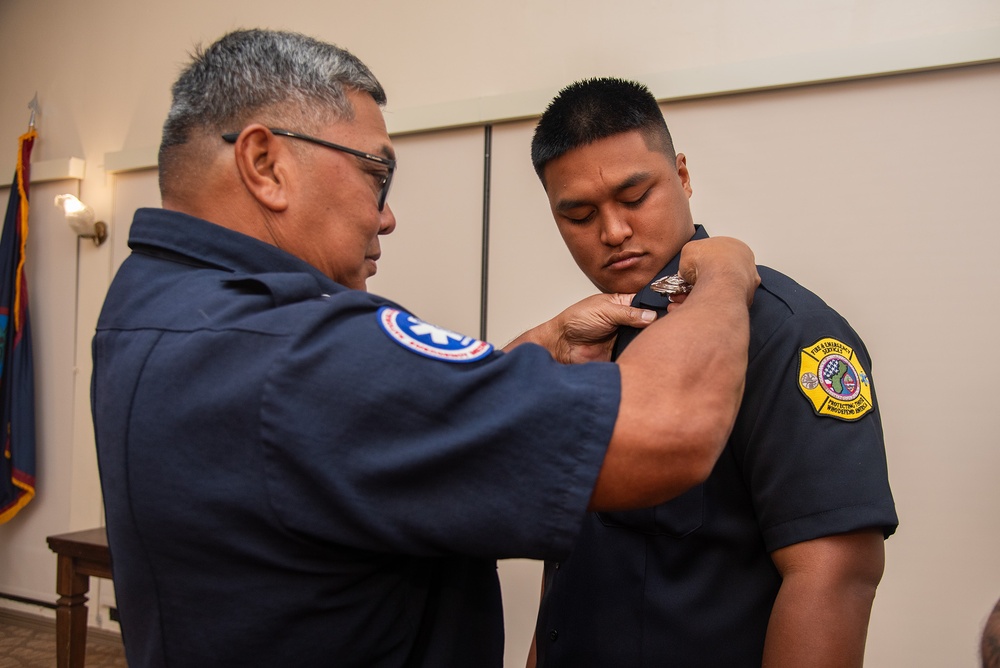
ASAN, Guam (April 26, 2024) - Firefighter Hance John Barcinas, right, receives his badge from his father, Firefighter Jesse Barcinas, to mark his graduation from the Joint Region Marianas Fire Academy during a ceremony at the Top O’the Mar in Asan, April 24.

The JRM Fire Academy is a rigorous 108-day program that is designed to provide recruits with a comprehensive understanding of all aspects of firefighting and emergency response services. The program emphasizes safety, teamwork, and effective communication. Graduates are fully certified to respond to various emergencies to include structural fires and hazardous materials incidents to medical and vehicle accidents.

(U.S. Navy photo by Shaina O’Neal)

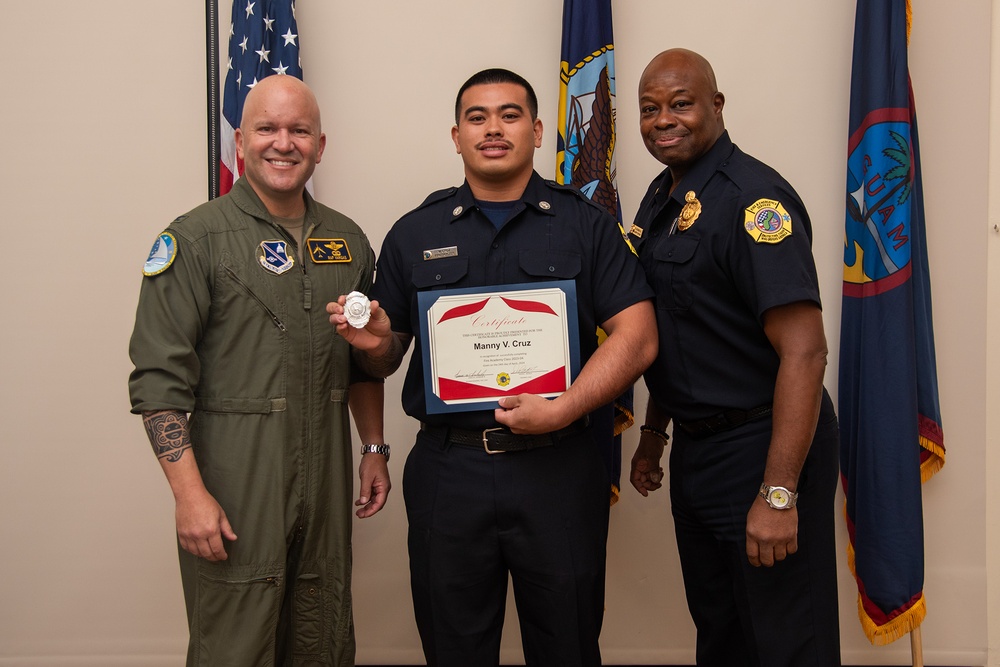
Col. Rafael Vargas, Joint Region Marianas (JRM) operations director, left, and JRM Deputy Regional Fire Chief James Scribner, right, present a certificate to Manny Cruz to mark his graduation from the JRM Fire Academy during a ceremony at the Top O’the Mar in Asan, April 24.

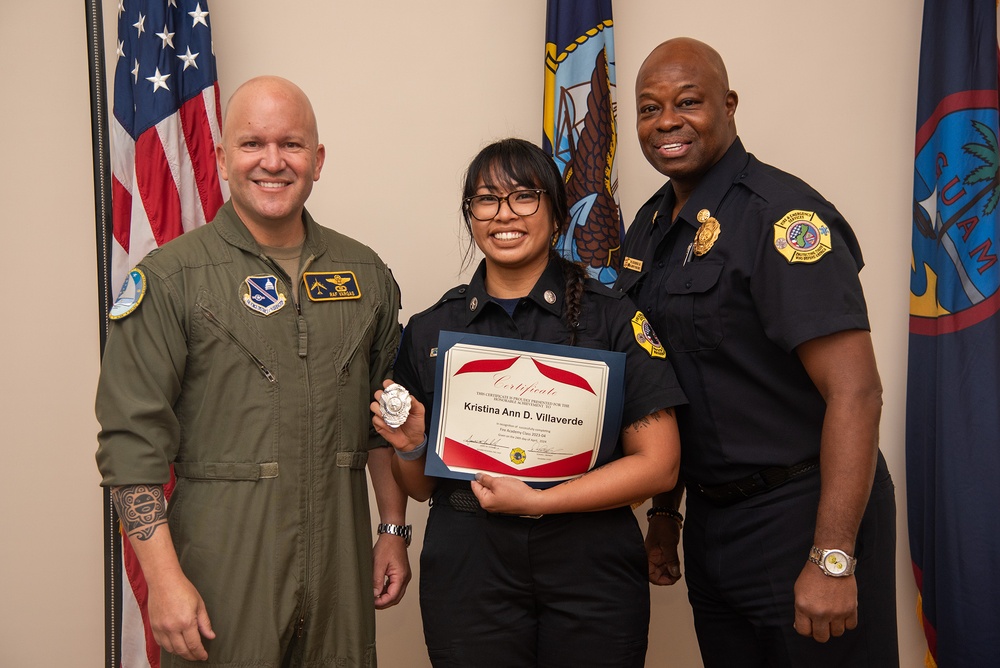
Col. Rafael Vargas, Joint Region Marianas (JRM) operations director, left, and JRM Deputy Regional Fire Chief James Scribner, right, present a certificate to Kristina Ann Villaverde to mark her graduation from the JRM Fire Academy during a ceremony at the Top O’the Mar in Asan, April 24.

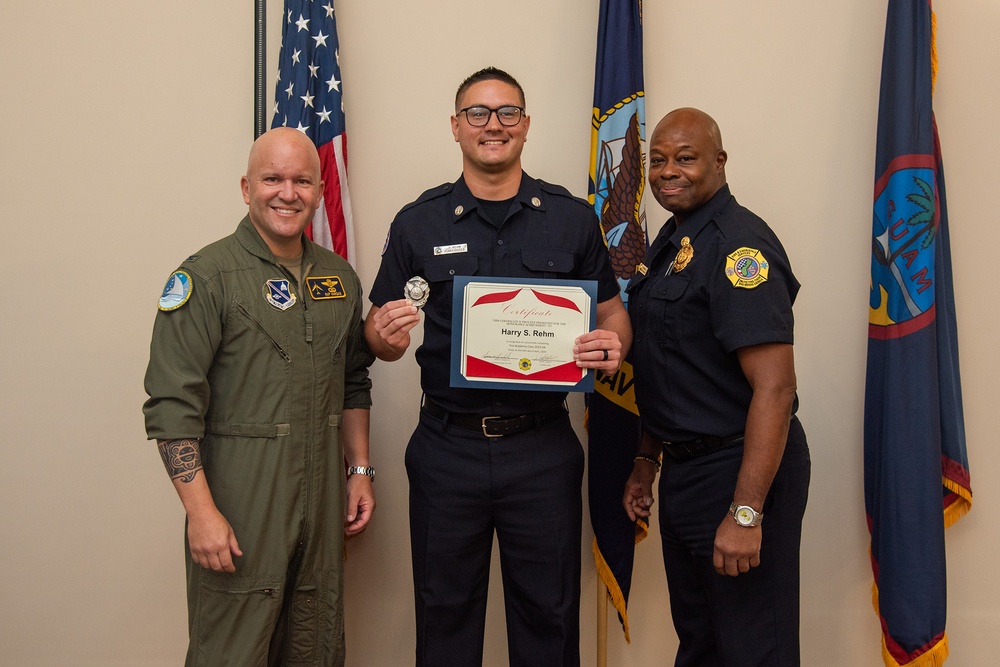
Col. Rafael Vargas, Joint Region Marianas (JRM) operations director, left, and JRM Deputy Regional Fire Chief James Scribner, right, present a certificate to Harry Rehm to mark his graduation from the JRM Fire Academy during a ceremony at the Top O’the Mar in Asan, April 24.

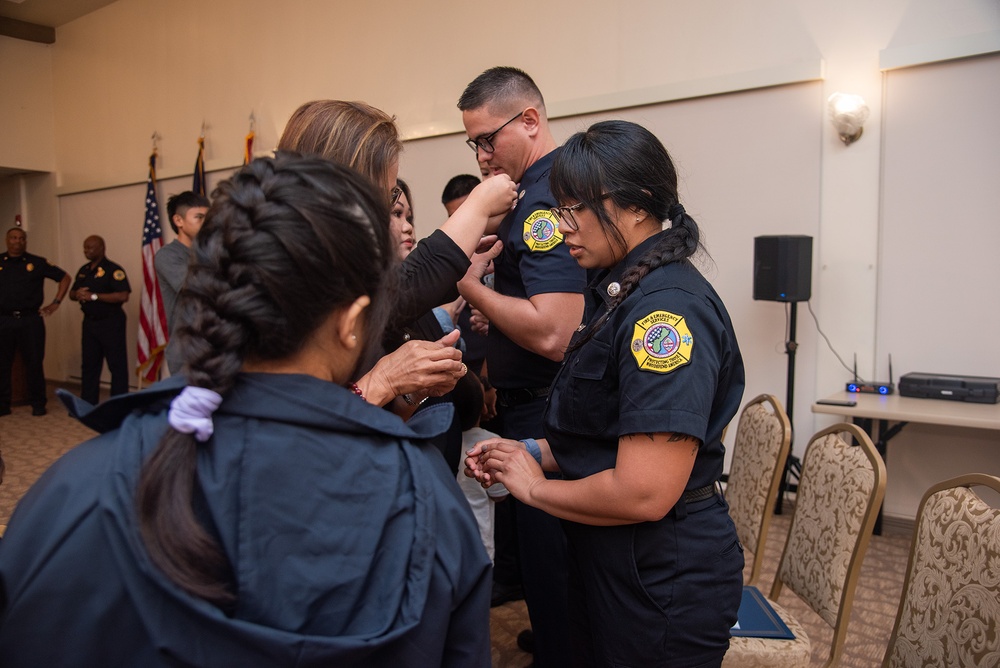
Newly indoctrinated firefighters receive their badges from family members to mark their graduation from the Joint Region Marianas Fire Academy during a ceremony at the Top O’the Mar in Asan, April 24.
 Col. Rafael Vargas, Joint Region Marianas (JRM) operations director, left, and JRM Deputy Regional Fire Chief James Scribner, right, present a certificate to Hance John Barcinas to mark his graduation from the JRM Fire Academy during a ceremony at the Top O’the Mar in Asan, April 24.


Friday, April 26, 2024

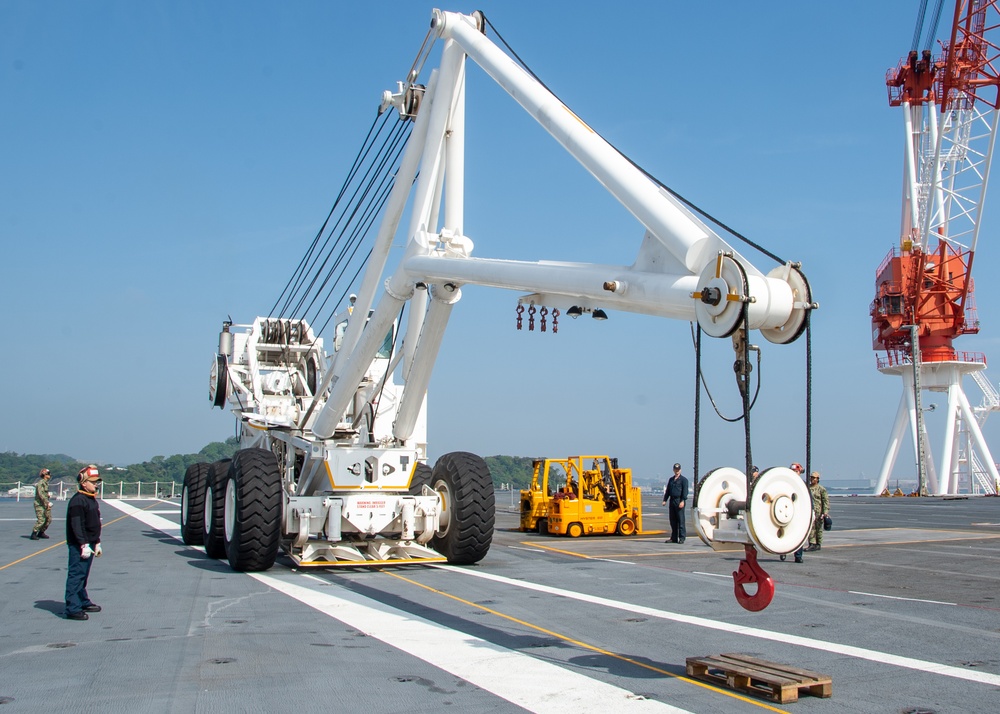
USS Ronald Reagan (CVN 76) Sailors maneuver the crash crane


YOKOSUKA, JAPAN
04.26.2024
Photo by Petty Officer 3rd Class Eric Stanton 
USS RONALD REAGAN (CVN 76)    

YOKOSUKA, Japan (April 26, 2024) Sailors maneuver an Aircraft Carrier Crash Crane on the flight deck of the U.S. Navy’s only forward-deployed aircraft carrier, USS Ronald Reagan (CVN 76), while in-port Commander, Fleet Activities Yokosuka, April 26. Ronald Reagan, the flagship of Carrier Strike Group 5, provides a combat-ready force that protects and defends the United States, and supports alliances, partnerships and collective maritime interests in the Indo-Pacific region. (U.S. Navy photo by Mass Communication Specialist 3rd Class Eric Stanton)

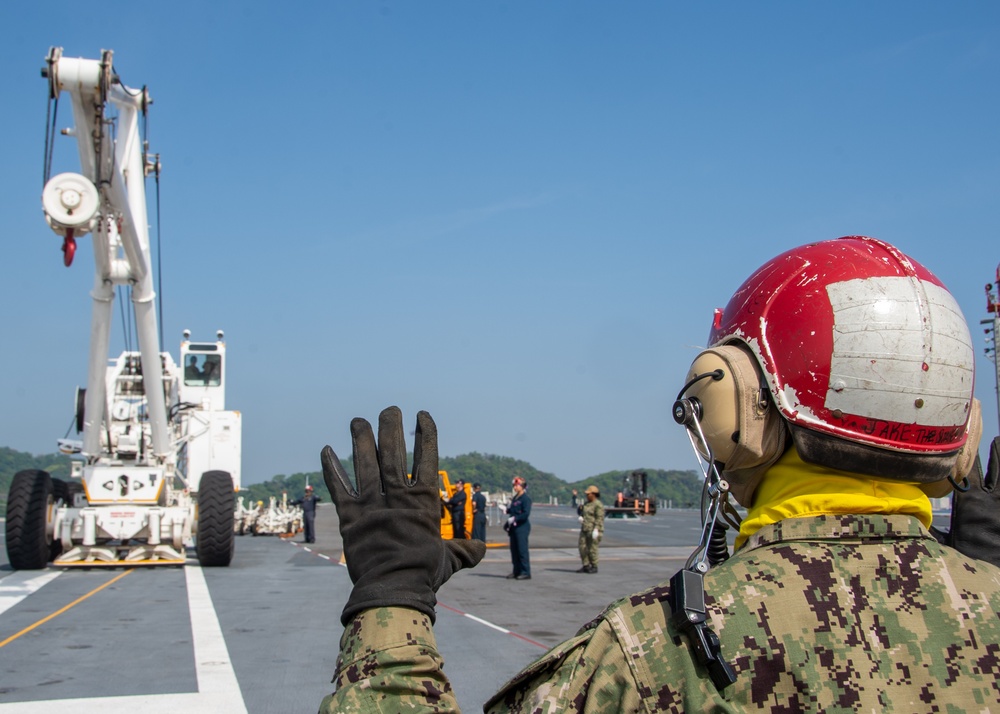
Aviation Boatswain’s Mate (Aircraft Handling) 3rd Class Dantae Nettles, from Philadelphia, directs an Aircraft Carrier Crash Crane on the flight deck of the U.S. Navy’s only forward-deployed aircraft carrier, USS Ronald Reagan (CVN 76), while in-port Commander, Fleet Activities Yokosuka, April 26. Ronald Reagan, the flagship of Carrier Strike Group 5, provides a combat-ready force that protects and defends the United States, and supports alliances, partnerships and collective maritime interests in the Indo-Pacific region. (U.S. Navy photo by Mass Communication Specialist 3rd Class Eric Stanton)

Joint Task Force Bravo hosts CENTAM SMOKE


SOTO CANO AIR BASE, HONDURAS
04.22.2024
Photo by Staff Sgt. Shelby Pruitt-Johnson 
Joint Task Force Bravo  

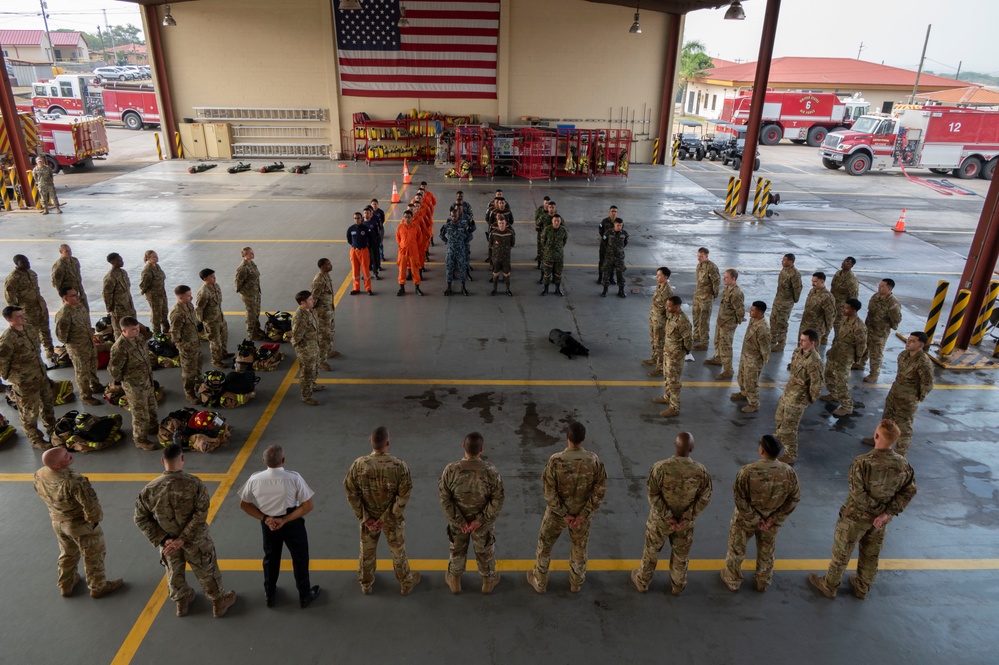
CENTAM SMOKE participants from Honduras, El Salvador, Guatemala, Colombia, Jamaica, and the 612th Air Base Squadron, Joint Task Force-Bravo, stand in formation during roll call at Soto Cano Air Base, Honduras, April 22, 2024. The purpose of CENTAM SMOKE, a bi-annual exercise, is to strengthen capabilities through the exchange of practices between countries and train under real scenarios.

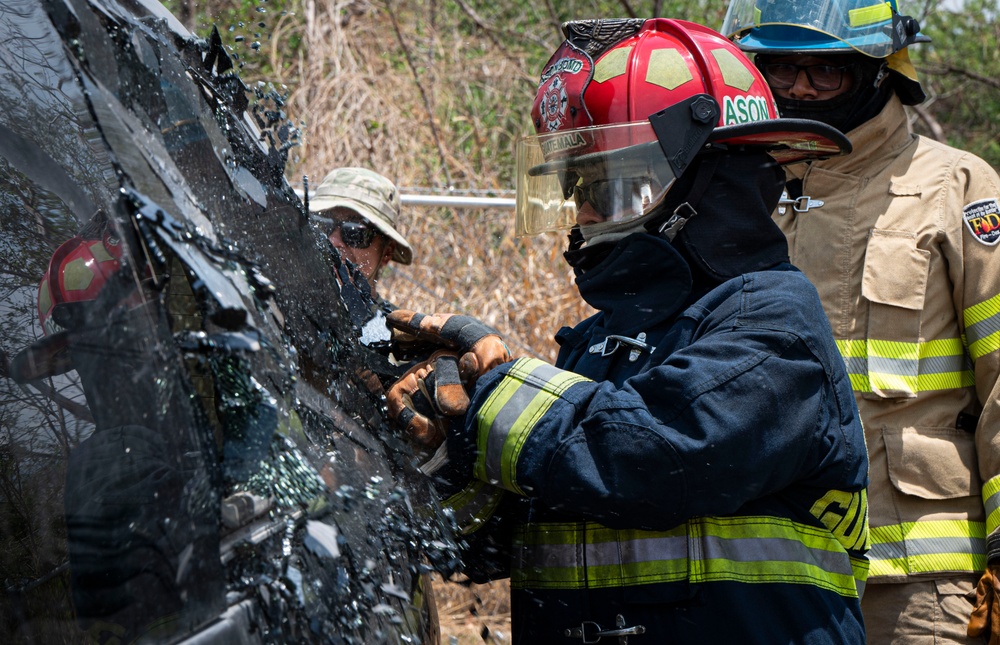
A Guatemalan firefighter, and CENTAM SMOKE participant, smashes a window during CENTAM SMOKE vehicle extrication training.
A CENTAM SMOKE participant competes in the Firefighter Challenge Competition.
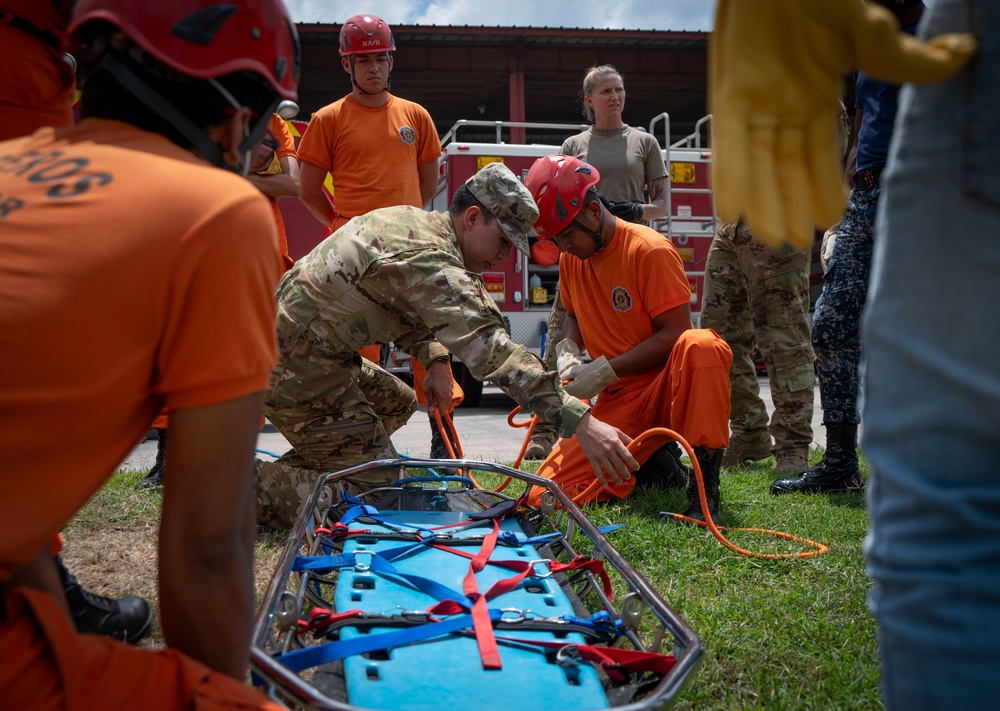
U.S. Air Force Staff Sgt. Trace Pule, assigned to the 612th Air Base Squadron, Joint Task Force-Bravo, teaches CENTAM SMOKE participants low-angle mechanical advantage rescue procedures at Soto Cano Air Base, Honduras, April 24, 2024. 
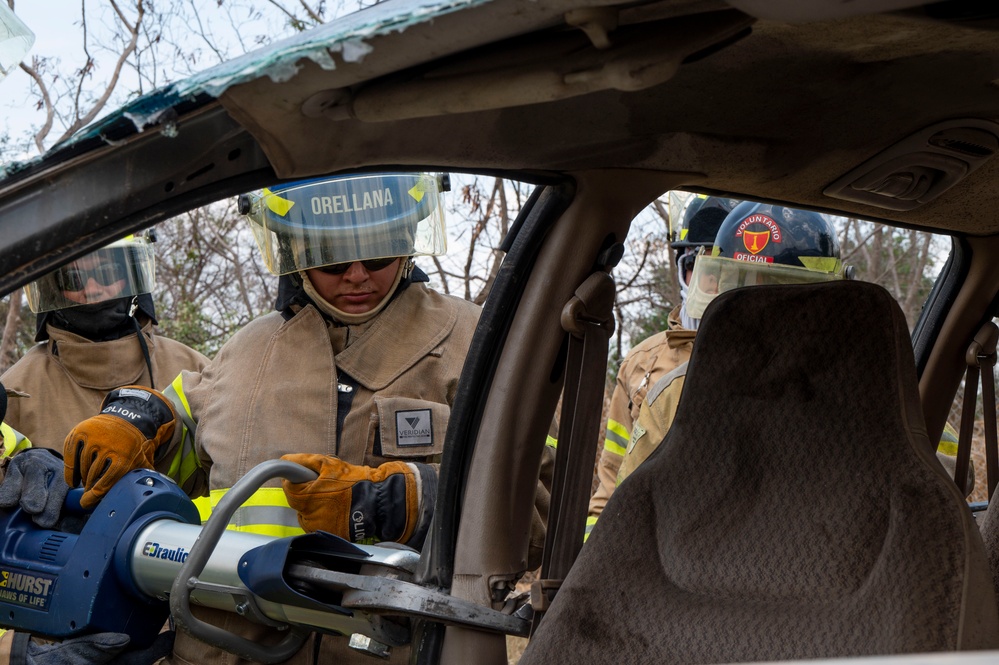
A Salvadoran firefighter, and CENTAM SMOKE participant, cuts a vehicle using hydraulic tool during CENTAM SMOKE Vehicle Extrication.
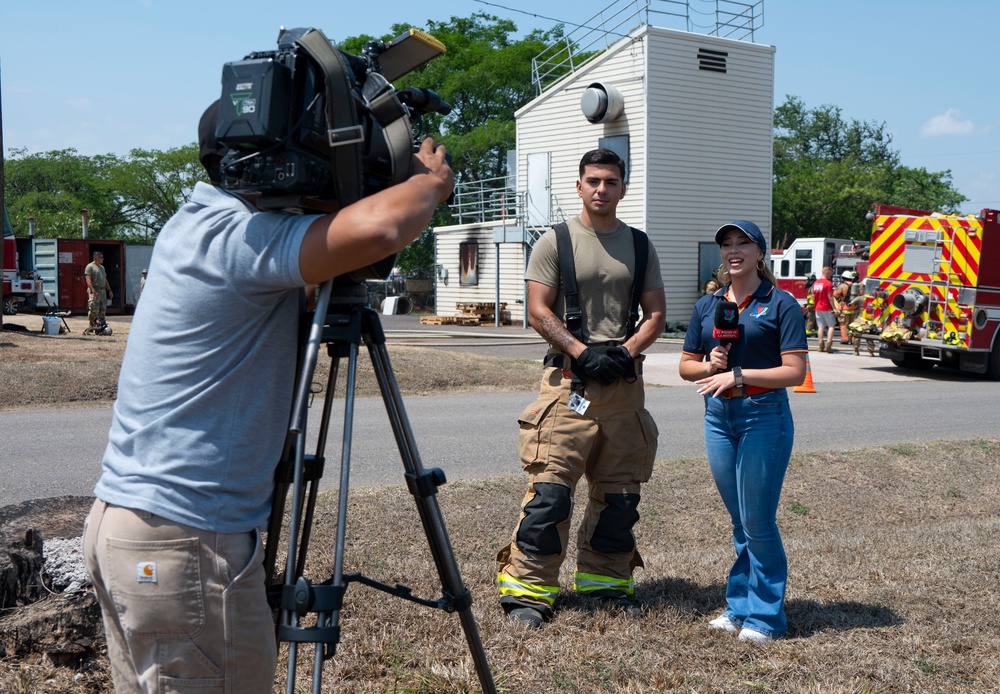
Airman First Class Axel Osuna, Firefighter Driver Operator, assigned to the 612th Air Base Squadron, Joint Task Force-Bravo, is interviewing with local Honduran media during CENTAM SMOKE at Soto Cano Air Base, Honduras, April 25, 2024. A safe, stable Central America is dependent on multinational exercises like CENTAM SMOKE that increases interoperability and builds combined partner capabilities.
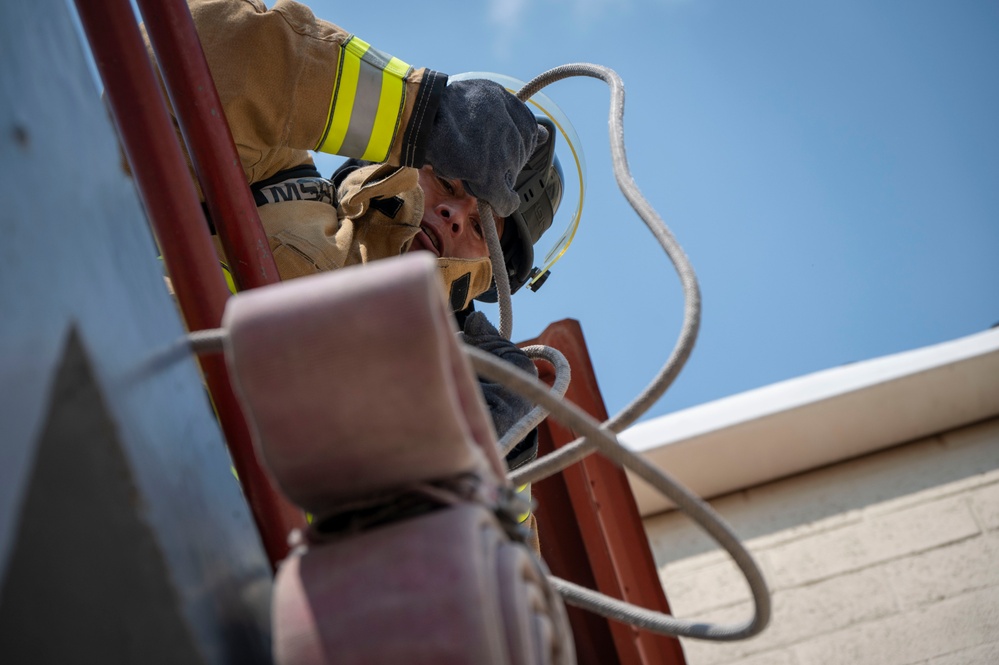
U.S. Air Force Staff Sgt. Deandre Brown, assigned to the 612th Air Base Squadron, Joint Task Force-Bravo, teaches a CENTAM SMOKE participant hose nozzle control during CENTAM SMOKE at Soto Cano Air Base, Honduras, April 23, 2024. During this training, Joint Task Force-Bravo’s 612th Air Base Squadron firefighters train firefighters from Honduras, El Salvador, Guatemala, Colombia and Jamaica.

Hollywood Guard and U.S. Forest Service host critical aerial firefighting training in Southern California

 
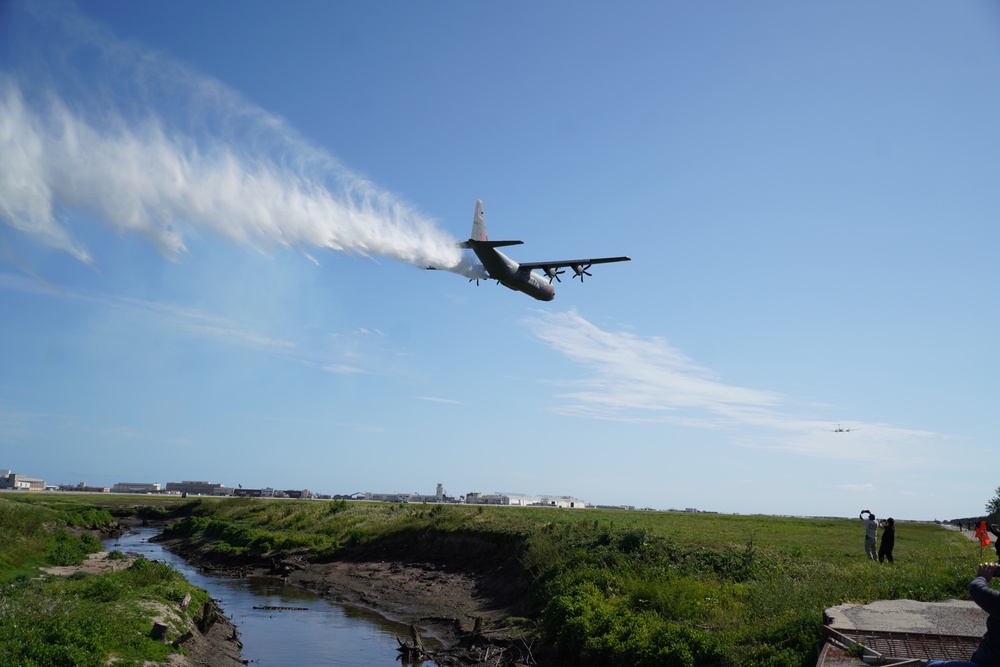
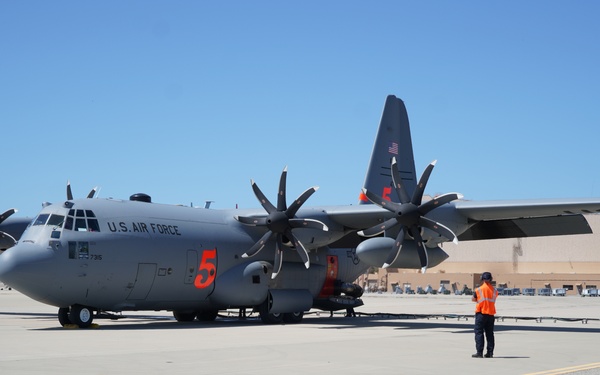
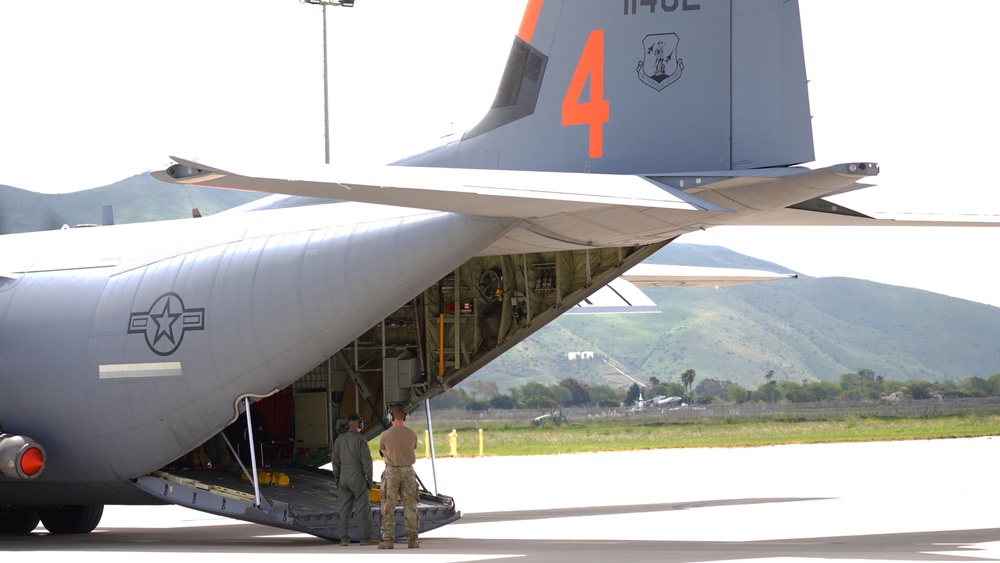
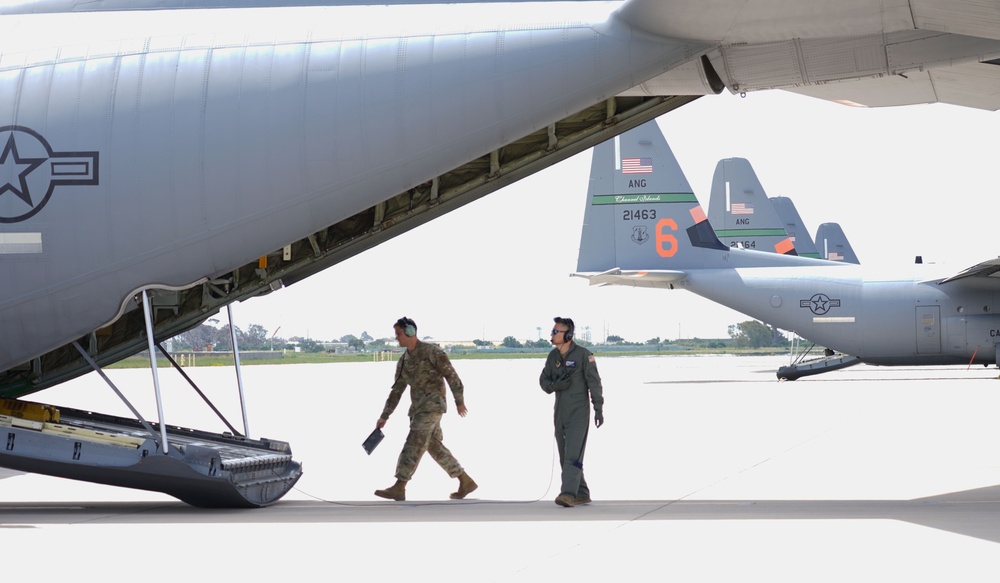
A California Air National Guard C-130J Super Hercules aircraft, assigned to the 146th Airlift Wing, equipped with the Modular Airborne Fire Fighting System (MAFFS) performs a water drop during MAFFS training at Channel Islands Air National Guard Station, Port Hueneme, California, April 24, 2024. Air National Guard aircrew from the California Air National Guard's, 146th Airlift Wing and the U.S. Air Force Reserve's 302nd Airlift Wing, train together to accomplish their aerial firefighting certification alongside the U.S. Forest Service and other wildfire prevention agencies. The recertification training includes classroom sessions, flying and ground operations for Air Force aircrews, civilian lead plane pilots, and support personnel from the Forest Service, Bureau of Land Management, and other federal and state agencies. (U.S. Air National Guard Photo by Tech. Sgt. Michelle Ulber)

PORT HUENEME, CA, UNITED STATES
04.26.2024
Story by Master Sgt. Nicholas Carzis 
146 Airlift Wing, California Air National Guard  

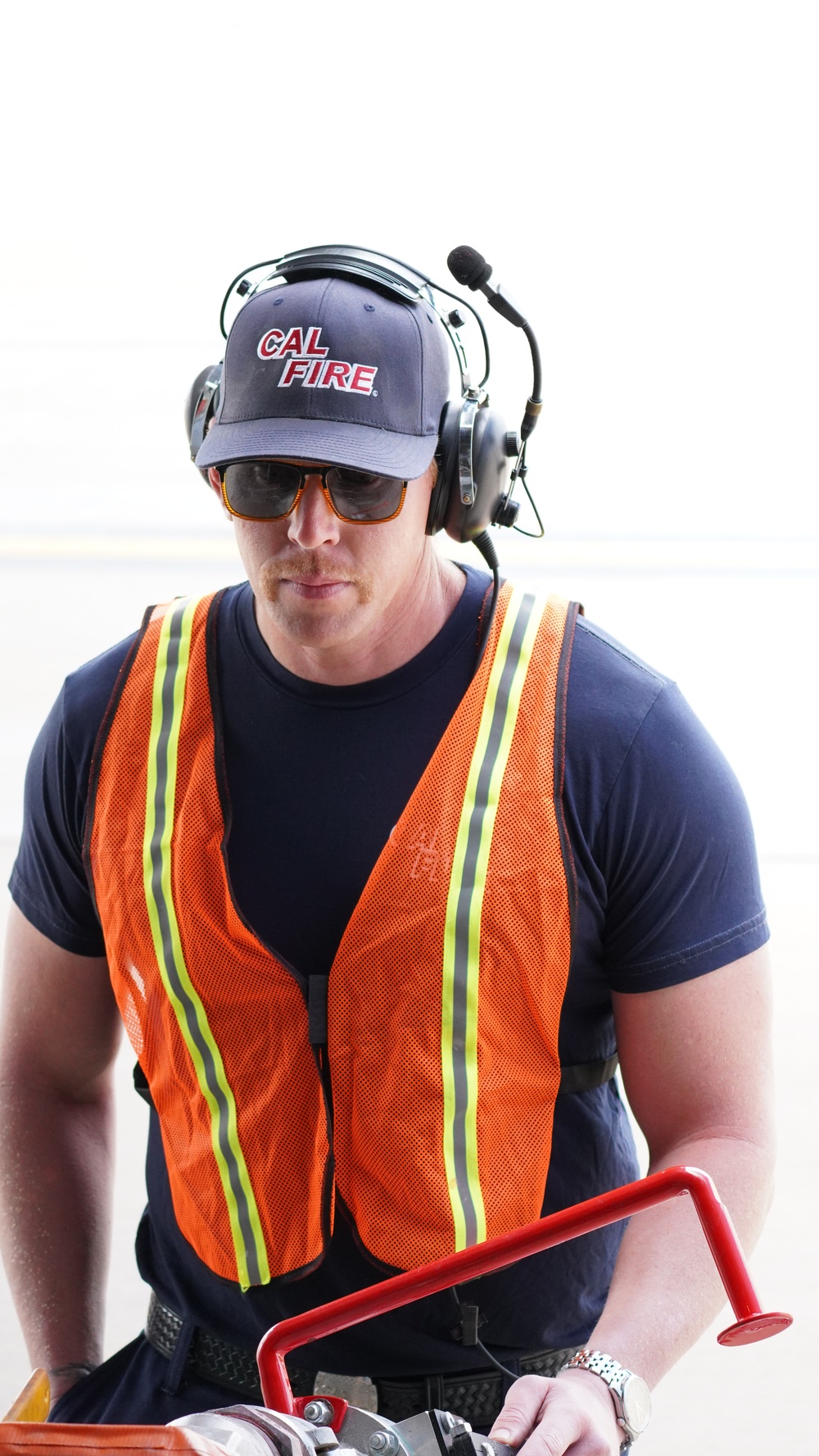
The U.S. Forest Service held its annual certification and training event for the aerial firefighting program known as MAFFS (Modular Airborne Fire Fighting System) with two of the four assigned Department of Defense aircrews from the Air Force Reserve’s 302nd Airlift Wing, Colorado Springs, Colorado, and the California Air National Guard’s 146th Airlift Wing nicknamed the “Hollywood Guard.” Together with wildland fire fighting agencies such as CAL FIRE, and the Bureau of Land Management, the multi-agency MAFFS program kicked off their first iteration of training this week at the Channel Islands Air National Guard Station.

During the same year as its 100-year centennial celebration and one year after the 50-year anniversary of the MAFFS program, the 146th Airlift Wing is hosting MAFFS training for the second year in a row.

MAFFS, a unique partnership between the U.S. Forest Service and the Department of Defense, shares a combination of resources supporting aerial firefighting operations that include equipment, personnel and aircraft that provide a critical “surge” capability to the U.S. Forest Service to slow or stop the spread of wildland fires when all commercial airtankers within the national airtanker fleet are fully committed or not readily available.

The U.S. Forest Service provides this training event annually, which requires any aircrew supporting this mission to gain their certification before they can support any wildland fire operations as a part of their annual training requirements. Afterwards, MAFFS aircrew will continue to supplement their experience throughout the year once they start supporting MAFFS missions after certification training. Depending on the cadence of what often is a busy fire season, MAFFS personnel must ensure they are making the most out of every opportunity for training.

While the number of wildfires in the U.S. is measured as an average amount for last year, it did hold the record for the fewest acreage burned in the past 25 years. During this time, MAFFS air tankers were first used on August 3, 2023, and released on September 6, 2023. During that 35-day activation, MAFFS aircrew flew 69 missions providing 73 retardant drops which totaled 185,263 gallons.

While nobody can predict when the next major fire incident will come, the one constant force that is ready to meet the challenges of a busy fire season are the people supporting MAFFS.

Col. DeAnna Franks, the operations group commander for the 302nd Airlift Wing and this year’s Air Expeditionary Group Commander for all Department of Defense assets for the MAFFS mission, says that the annual training events are a pivotal moment within the pre-fire season to ensure readiness across the MAFFS enterprise.

“MAFFS is a robust partnership with many agencies and support functions that work intricately together to accomplish large-scale aerial firefighting missions successfully. This is why MAFFS training is so important because it affords us the opportunity to capitalize on our collaboration efforts with all the agencies participating. Completing our annual training each year is paramount as it allows our aircrews to get those critical training hours we need before we respond to a real fire,” said Franks.

Franks says that the intricate partnership’s success is built on a valued cooperation over the past 50 years.

“Modular, the first word of the MAFFS acronym, might perhaps be the best word to corroborate just how flexible and efficient our working partnerships have developed over the last 50 years. Last year in December, the MAFFS community collectively celebrated it’s 50-year semi-centennial anniversary with all our partners working within the U.S. Forest Service, CAL FIRE, the Bureau of Land Management, as well as many other valued firefighting assets across the county who support the MAFFS mission. It was a great opportunity to reflect on just how impactful this mission is and just how special all the people involved with the MAFFS program are,” said Franks.

Franks added, “For me, when I think about the success of this government program that has been around for as long as it has, it’s clear to me why the MAFFS mission has been so successful. The people of MAFFS are a testament to the program because of all the great work they do, and it’s an absolute honor to work alongside everyone who supports the mission.”

Kim Christensen, deputy assistant director operations for the U.S. Forest Service and one of the driving forces behind the MAFFS training at Channel Islands, has been a part of the MAFFS mission since 2012, says she still loves coming to work with the people involved with the MAFFS mission after all these years.

“The teamwork and partnerships are really what make the program such a success. In addition to the airlift wings, a number of other federal and state agencies and local departments are also involved. The members of the airlift wings that participate in the MAFFS program are consummate professionals. They take the annual training very seriously and are always prepared to assist us with wildfire suppression, whenever asked,” said Christensen.

Utilizing the same training schedule as the year prior, both training events will take place on two separate weeks to help mitigate the busy schedules for the 3 Air National Guard and Air Force Reserve components involved. Two additional Air National Guard units assigned to the MAFFS mission from the Nevada’s 152nd Airlift Wing, and the Wyoming Air National Guard’s 153rd Airlift Wing, will also travel to Channel Islands Air National Guard Station to complete their training and certification in early May.

For more information and stories regarding the MAFFS mission, please visit the MAFFS AEG page at https://www.dvidshub.net/feature/MAFFSAEG


Most Viewed Articles