 |
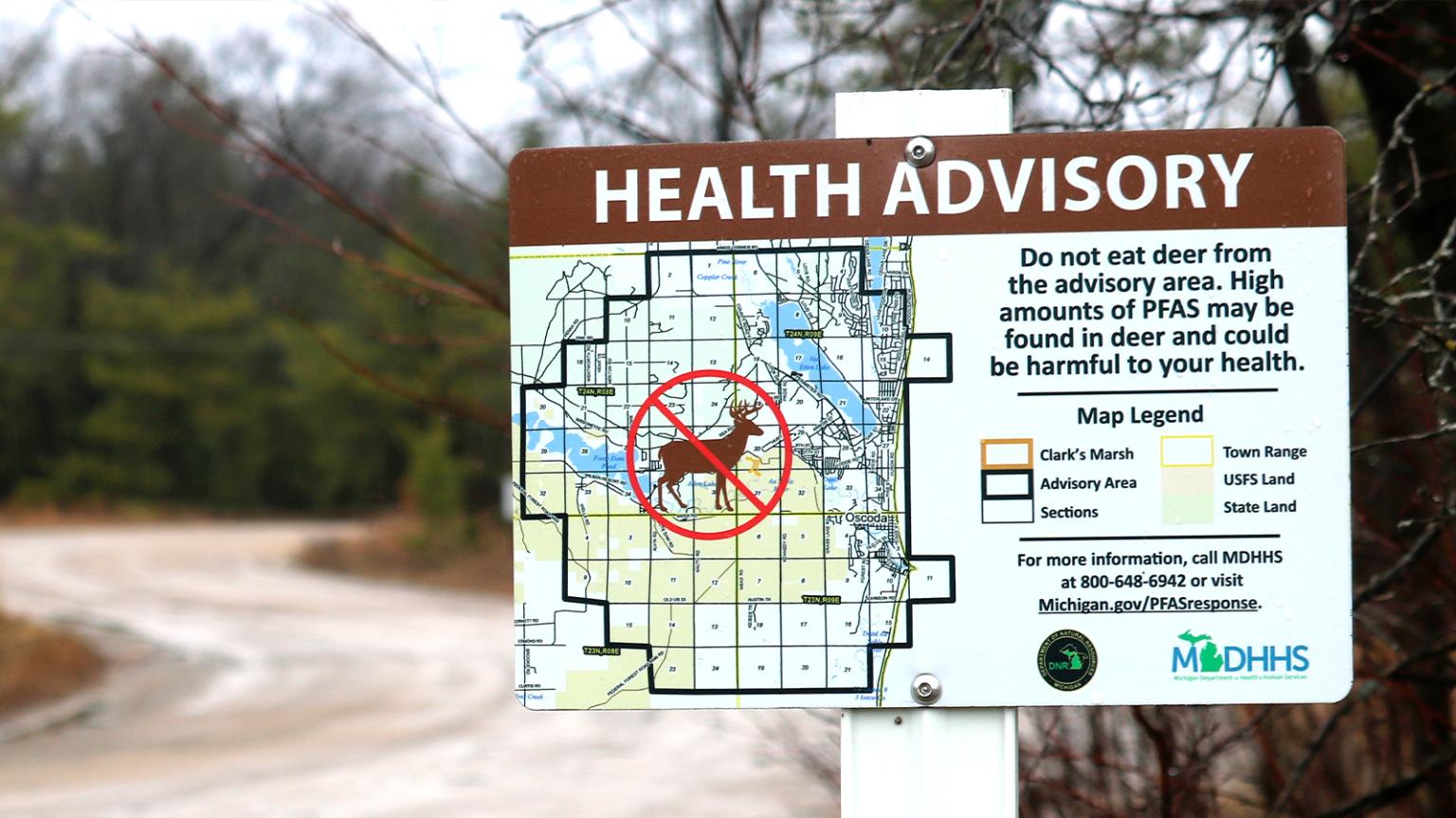
| A sign warning hunters not to eat deer because of high amounts of toxic PFAS chemicals in their meat, in Oscoda, Michigan. Drew YoungeDyke, National Wildlife Federation via AP |
Climate News Fellow
Published
Apr 29, 2024
Excessive levels of PFAS have been detected at 80 percent of active and decommissioned military bases.
In 2016, Tony Spaniola received a notice informing him that his family shouldn’t drink water drawn from the well at his lake home in Oscoda, Michigan. Over the course of several decades, the Air Force had showered thousands of gallons of firefighting foam onto the ground at Wurtsmith Air Force Base, which closed in 1993. Those chemicals eventually leached into the soil and began contaminating the groundwater.
Alarmed, Spaniola began looking into the problem. “The more I looked, the worse it got,” he said. Two years ago, his concern prompted him to co-found the Great Lakes PFAS Action network. The coalition of residents and activists is committed to making polluters, like the military and a factory making waterproof shoes, clean up the “forever chemicals” they’ve left behind.
PFAS, or per- and polyfluoroalkyl substances, are a class of nearly 15,000 fluorinated chemicals used since the 1950s to make clothing and food containers, among other things, oil- and water-repellent. They’re also used in firefighting foam. These chemicals do not break down over time, and have contaminated everything from drinking water to food. Research has linked them to cancer, heart and liver problems, developmental issues, and other ailments.
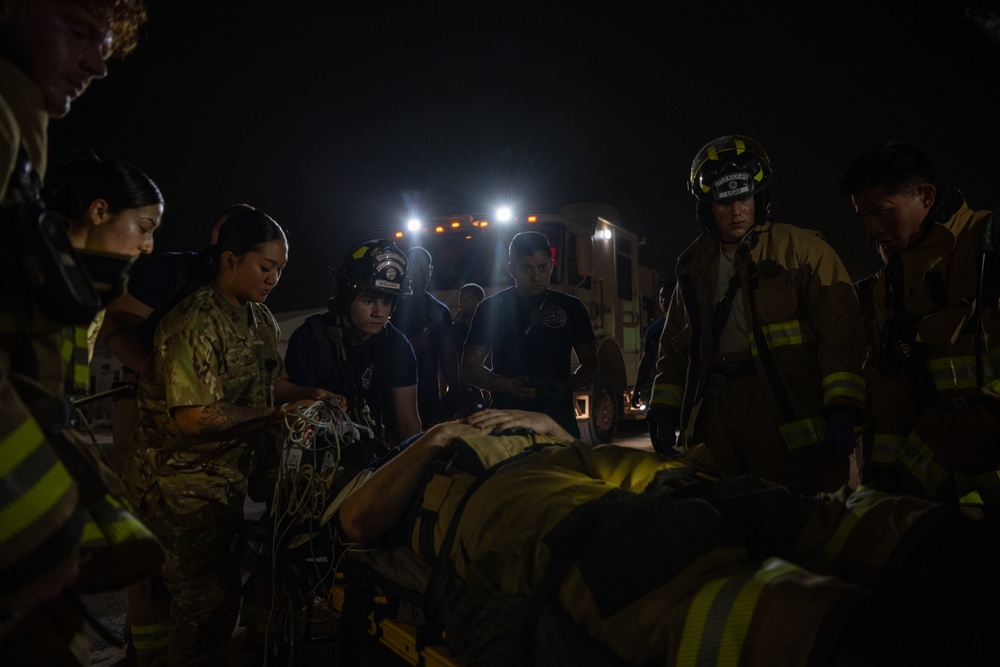
The U.S. Department of Defense, or DOD, is among the nation’s biggest users of firefighting foam and says 80 percent of active and decommissioned bases require cleanup. Some locations, like Wurtsmith, recorded concentrations over 3,000 times higher than what the agency previously considered safe.
Today, the EPA considers it unsafe to be exposed to virtually any amount of PFOA and PFOS, two of the most harmful substances under the PFAS umbrella. Earlier this month, it implemented the nation’s first PFAS drinking water regulations, which included capping exposure to them at the lowest detectable limit. As of April 19, the agency also designated these two compounds “hazardous substances” under the federal Superfund law, making it easier to force polluters to shoulder the costs of cleaning them up.
Meeting these regulations means that almost all of the 715 military sites and surrounding communities under Defense Department investigation for contamination will likely require remediation. Longstanding cleanup efforts at more than 100 PFAS contaminated bases that are already designated Superfund sites, like Wurtsmith, reveal some of the challenges to come.
“The heart of the issue is, how quickly are you going to clean it up, and what actions are you going to take in the interim to make sure people aren’t exposed?” said Spaniola.
In a statement to Grist, the DOD says its plan is to follow a federal cleanup law called the Comprehensive Environmental Response, Compensation, and Liability Act, or CERCLA, to investigate contamination and determine near- and long-term cleanup actions based on risk. But many advocates, including Spaniola, say the process is too slow and that short-term fixes have been insufficient.
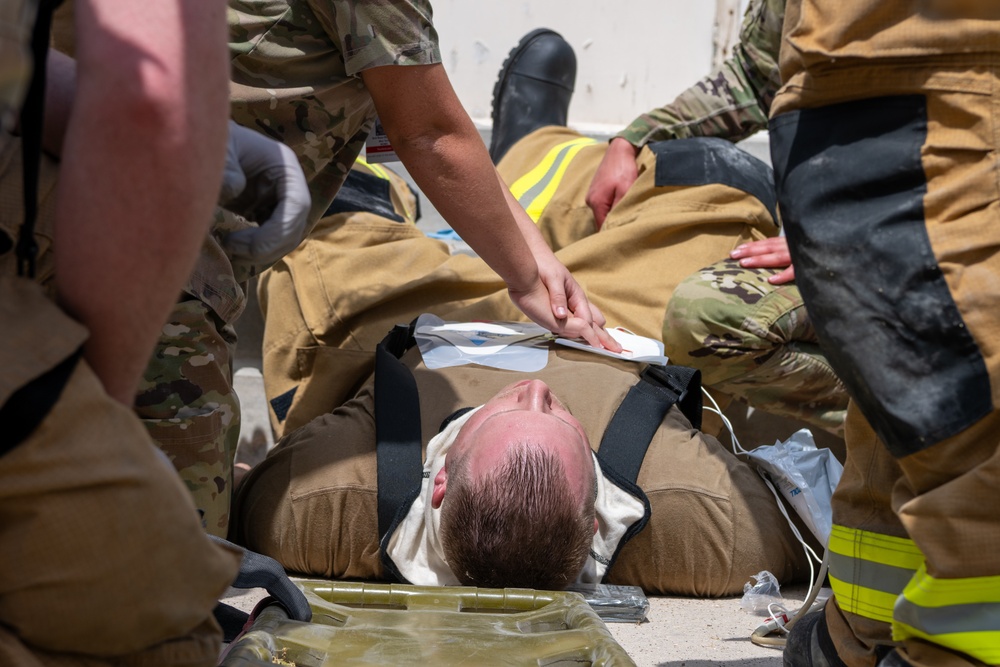
The problem started decades ago. In the 1960s, the Defense Department worked with 3M, one of the largest manufacturers of PFAS chemicals, to develop a foam called AFFF that can extinguish high-temperature fires. The PFAS act as a surfactant, helping the material spread more quickly. By the 1970s, every military base, Navy ship, civilian airport, and fire station regularly used AFFF.
In the decades that followed, millions of gallons flowed into the environment. According to the nonprofit Environmental Working Group, or EWG, 710 military sites throughout the country and its territories have known or suspected PFAS contamination. Internal studies and memos show that not long after 3M and the U.S. Navy patented the foam in 1966, 3M learned that its PFAS products could harm animal test subjects and accumulated in the body.
In a 2022 Senate committee hearing, residents from Oscoda testified about the health impacts, such as tumors and miscarriages, from the PFAS contamination at Wurtsmith. In 2023, Michigan reached a settlement after suing numerous manufacturers, including 3M and Dupont. Today, thousands of victims across the country are suing the chemicals’ manufacturers. While some organizations and communities have tried to hold the military financially responsible for this pollution — farmers in several states recently filed suits in the U.S. District Court in South Carolina to do just that — the DOD says it’s not legally liable.
Congressional pressure on the Pentagon to clean these sites has been growing. In 2020, National Defense Authorization Acts required it to phase out PFAS-laden firefighting foam by October, 2023. Since passing that law, Congress has also ordered the department to publish the findings of drinking and groundwater tests on and around bases.
Results showed nearly 50 sites with extremely high levels of contamination, and hundreds more with levels above what was then the EPA’s health advisory. Following further congressional pressure, the military announced plans to implement interim cleanup measures at three dozen locations, including a water filtering system in Oscoda.
According to a report by the Environmental Working Group, it took an average of nearly three years for the Department of Defense to complete testing at these high-contamination sites. It took just as long to draft stopgap cleanup plans. Today, 14 years after PFAS contamination was discovered at Wurtsmith, the first site to be tested, no site has left the “investigation” phase, and there has yet to be a comprehensive plan to begin permanent remediation on any base.
The Department of Defense says any site found to have PFAS contamination exceeding the Environmental Protection Agency’s previous guideline of 70 parts per trillion will receive immediate remediation, such as bottled waters and filters on faucets. When a site is found to be contaminated, the EPA says, the department has 72 hours to provide residents with alternate sources of water.
After six years spent working with various cleanup initiatives, Spaniola says waiting for the military to take action has taken a toll on the people of Oscoda. “The community had a really good relationship with the military,” he said. “I’ve watched that change from a very trusting relationship to a terrible one.”
Dozens of states have mandated additional requirements to treat PFAS in municipal water systems, but such efforts often overlook private well owners. That’s leaving thousands of people at risk, given that in Michigan, where some 1.5 million people drink water from contaminated sources, 25 percent of residents rely on private wells.
Nationwide, the Environmental Working Group found unsafe water in wells near 63 military bases in 29 states. While the DOD has tested private wells, it has not published the total number of wells tested or identified which of them need to be cleaned up.
“For those who are on well water, it’s a real problem until there’s a bit of recognition for some sort of responsibility for the contamination,” said Daniel Jones, associate director of the Michigan State University Center for PFAS Research. He is advising cleanup efforts near Grayling, Michigan. “It sort of comes down to who has pockets deep enough to pay for the things that need to be done.”
The EPA’s recent decision to designate PFOA and PFOS “hazardous substances” under the federal Superfund law is unlikely to provide quick financial assistance to communities, even though the agency has made $9 billion available for private well owners and small public water systems to address contamination. Whether that support reaches private well owners is up to individual states, which can work with regional EPA offices to draft project plans before applying for grants to secure funding.
The agency has established a five-year window for water systems to test for PFAS and install filtering equipment before compliance with the newly tightened levels will be enforced. While EPA says the new PFOA and PFOS regulations do not immediately trigger an investigation or qualify them as Superfund sites on the National Priorities List, decisions for each site will be on a case-by-case basis.
“It is a tremendous win for public health, it is tremendously important and cannot come soon enough, particularly for military communities who have been exposed for decades,” said Melanie Benesh, vice president of governmental affairs at the Environmental Working Group. Benesh hopes that the new rules help push the Defense Department to move more quickly.