Sunday, May 5, 2024

Boeing enforces lockout of private firefighters in Seattle amid wage disagreement.

By Caitlyn Freeman and Daniel Beekman

Seattle Times staff reporters

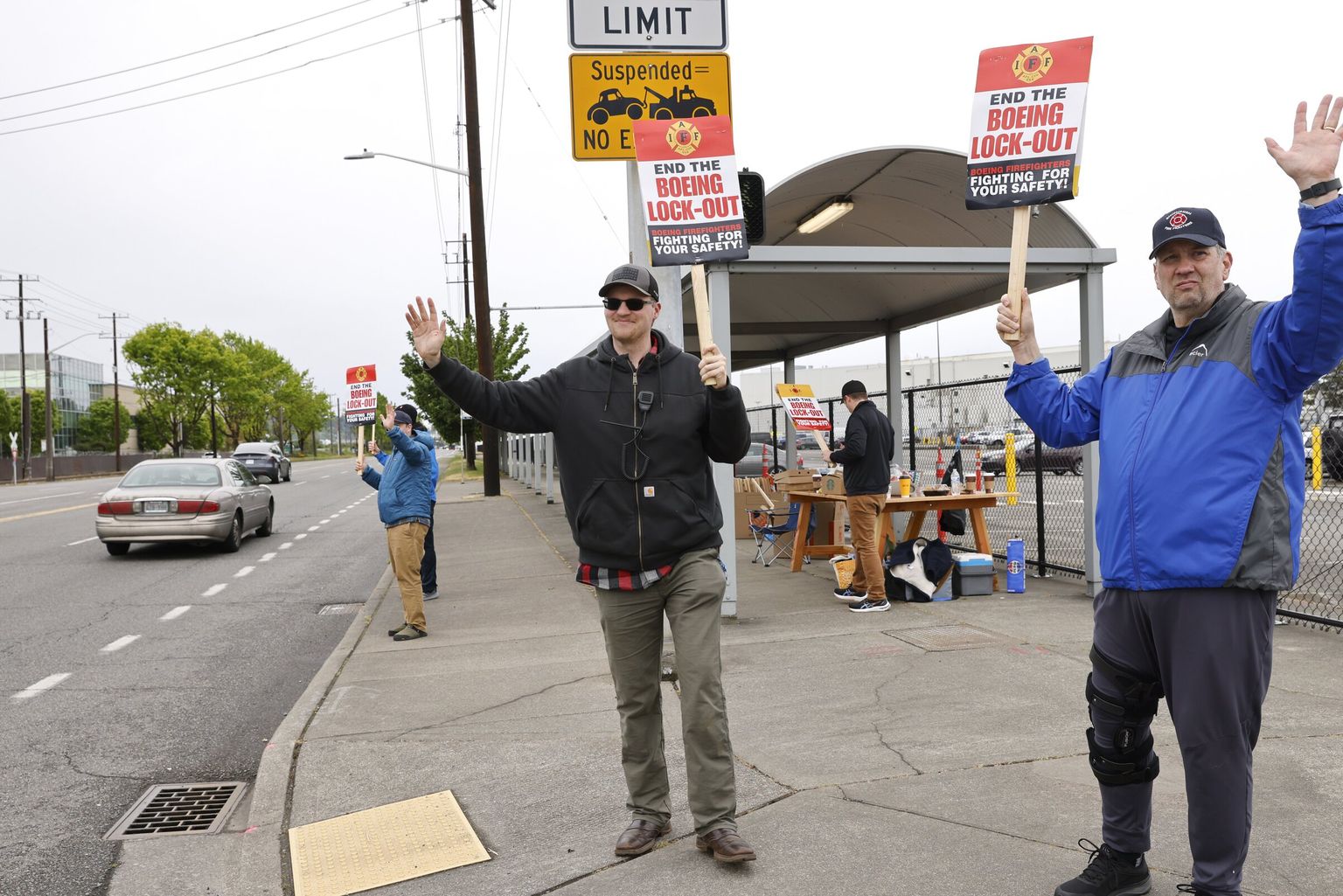
Boeing locked out its on-site firefighters at its Washington facilities early Saturday morning after contract negotiations with their union reached a standstill.

The lockout came after members of the International Association of Fire Fighters Local I-66 twice rejected Boeing contract offers in recent months and talks toward another offer broke down almost immediately Monday, the union said.

The Boeing firefighters are on hand for fueling and flights, do fire-prevention work and respond to accidents and emergencies at the company’s facilities, receiving about 200 calls each month, according to their union.

The union says Boeing’s latest contract offer includes “substandard wages” and requires firefighters to work 19 years before reaching their pay ceiling. Currently, other Boeing employees max out after five years of employment. The union also says its firefighters earn up to 30% less than those working at nearby fire departments.

Boeing said in a statement: “Despite extensive discussions through an impartial federal mediator, we did not reach an agreement with the union. We are disappointed the union chose not to even bring our offer to its members for one final vote. We have now locked out members of the bargaining unit and fully implemented our contingency plan with highly qualified firefighters performing the work of IAFF members.”

The lockout started at 12:01 a.m. Saturday, affecting about 130 Local I-66 members, said Matt Lowery, an IAFF strategic campaigns specialist. They’re normally stationed at sites in Auburn, Everett, Renton, Seattle and Moses Lake, according to the union.

“The people who work for Boeing are really dedicated. They believe in the company” and want to help it regain its reputation for safety, Lowery said. “So it’s too bad this is how it transpired.”

As of late Saturday afternoon, no new negotiations between Boeing and the union had been scheduled, he said.

The union says the lockout will negatively affect surrounding cities and counties, because local fire and emergency medical services will respond to any emergencies at Boeing facilities.

“The surrounding agencies are being told” by Boeing, “‘Hey, we might have somebody on-site but you’re still on the ball for all responses,'” Lowery said.

In a media fact sheet, Boeing said it expects no interruption of firefighting services at its facilities and will use non-IAFF firefighters to do the work. It said IAFF firefighters have always called on local departments during emergencies.

According to the fact sheet, the union’s proposed pay progression would result in the firefighters maxing out within six years of employment, which Boeing says is inconsistent with industry standards.

The company’s offer includes a new pay structure with an increase of $21,000 per year on average, according to the fact sheet. The average take-home pay of a Boeing firefighter in 2023 was $91,000, the company says.

Boeing said the union is asking for standards typically applied to local and municipal departments. It said the work being done by its firefighters is “completely different” and that its offer is similar to other industrial fire departments.

“The union is using standards that do not apply to this bargaining unit,” Boeing’s fact sheet said.

Casey Yeager, the Local I-66 president, said the firefighters deserve better compensation because the incidents they respond to are more dangerous than those faced by municipal departments. And if not contained quickly, Yeager said, they can “result in millions of dollars in damage to airplanes Boeing sells around the world.”


USS Stout helps injured cargo ship crew member


 USS Stout helps injured cargo ship crew member

By Diana Stancy

The crew of the Navy destroyer Stout recently provided medical assistance to an injured member of a cargo ship Monday while conducting operations with Carrier Strike Group 8 off the coast of North Carolina.

The Stout’s bridge crew overheard a bridge-to-bridge radio transmission from a cargo vessel requesting medical assistance from the Coast Guard as it completed exercise Group Sail last month, the Navy said in a news release.

The destroyer jumped into action and immediately prepared a small boat team equipped with medical personnel as it headed toward cargo vessel Grande Portogallo, which was en route for Mexico. The Stout sent five sailors on a rigid inflatable boat to embark the cargo vessel and treat the crew member, who suffered injuries from a hot fuel oil spill.

The team eventually determined the injured crew member required a medical evacuation, prompting the Stout team to coordinate with the Coast Guard to arrange a helicopter to arrive on the scene. The Stout team then transferred medical care to the Coast Guard team upon arrival, transporting the patient to shore for additional treatment and evaluation.

“The crew performed well as professionals, quickly transitioning from tactical training to real-life humanitarian assistance,” Cmdr. Desmond Walker, commanding officer of the Stout, said in a statement. “The coordination between our combat information center, bridge, small boat team and the U.S. Coast Guard ensured the fastest response possible, given the type of emergency.”

The Stout is part of the Harry S. Truman carrier strike group. The carrier wrapped up a maintenance period in December and is poised to complete its Composite Training Unit Exercise this summer ahead of deploying later this year.


Iowa ANG firefighters train with ARFF trainer


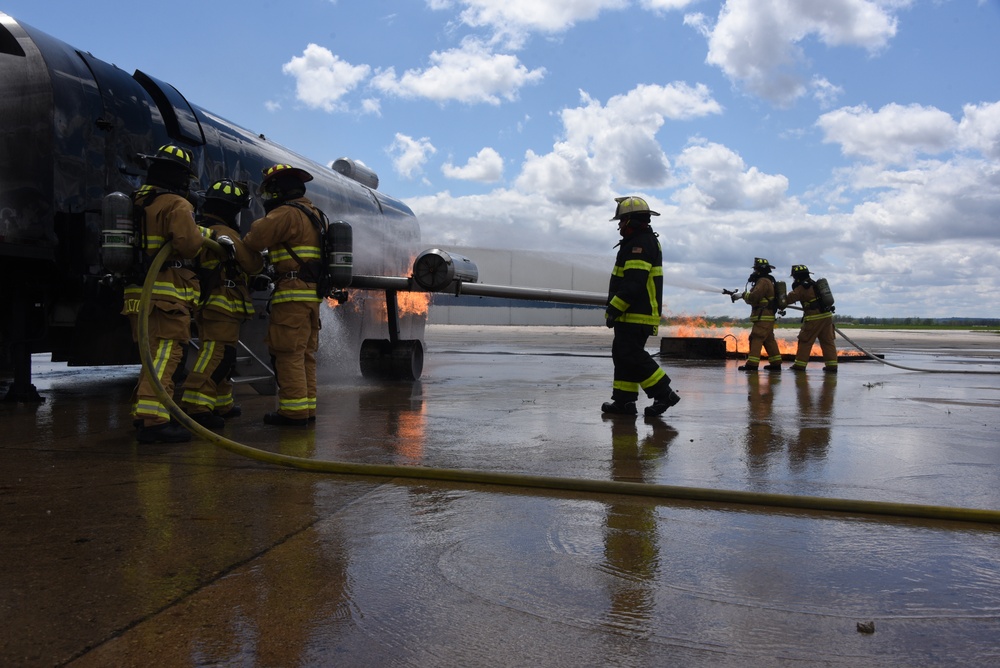
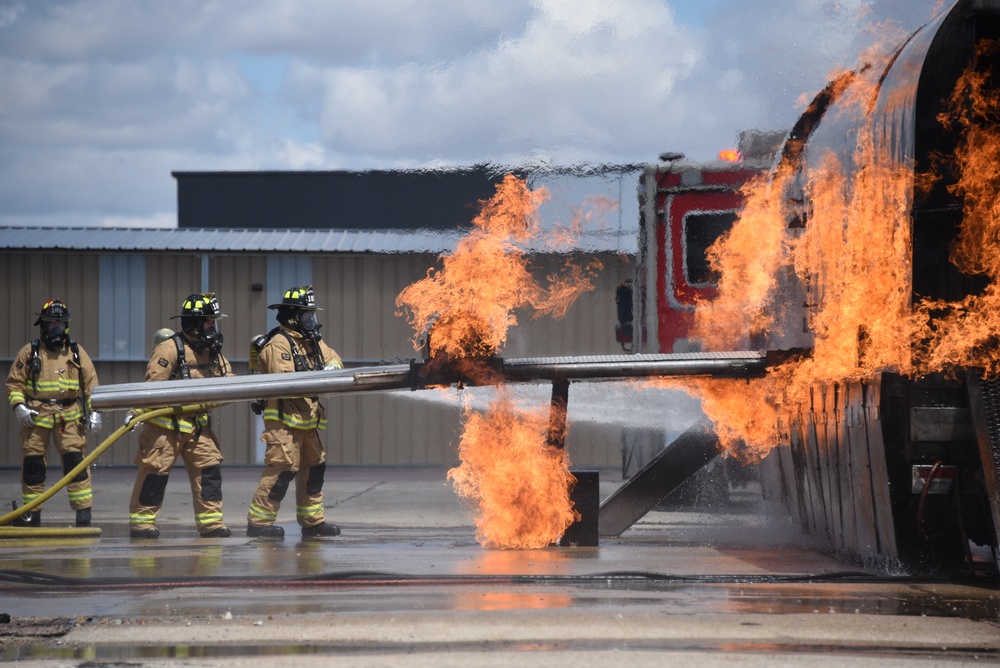
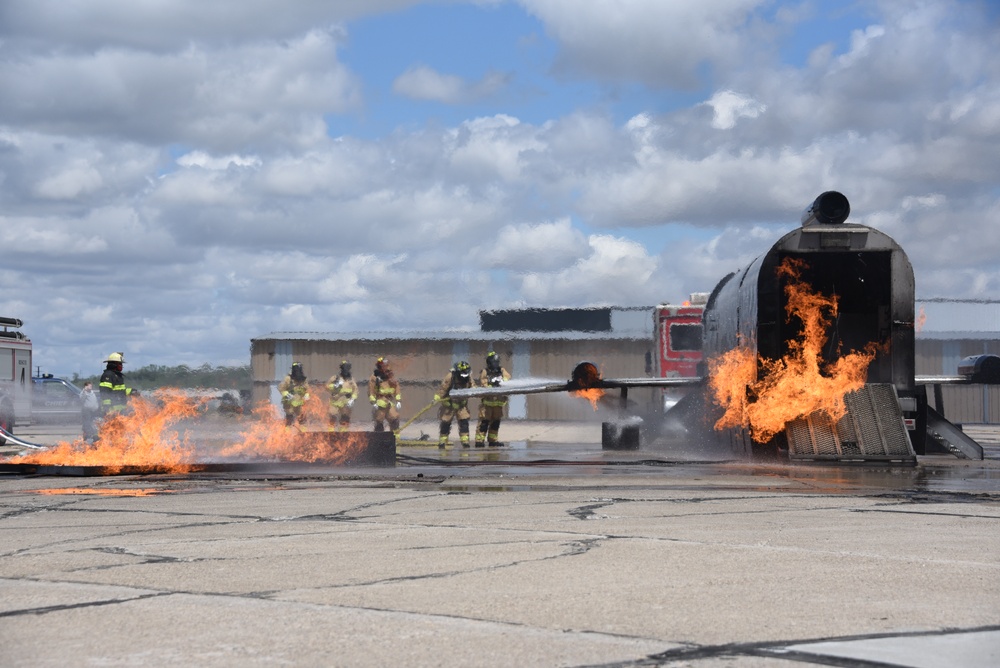
Firefighters from the Iowa Air National Guard’s 185th Air Refueling Wing fire department train multiple firefighting tasks with the Aircraft Rescue and Firefighting trainer in Sioux City, Iowa on May 4, 2024. U.S. Air National Guard photo Senior Master Sgt. Vincent De Groot

SIOUX CITY, IA, UNITED STATES
05.05.2024
Story by Senior Master Sgt. Vincent De Groot 
185th Air Refueling Wing, Iowa Air National Guard  

Firefighters from the Iowa Air National Guard’s 185th Air Refueling Wing fire department trained on multiple firefighting tasks with the Aircraft Rescue and Firefighting trainer over the May training weekend in Sioux City.

According to 185th Assistant Chief Fire of Operations, Master Sgt. Mitch Decker aircraft fire fighting presents unique challenges because aircraft fires usually involve large amounts of fuel.

“We want to make sure that the firefighting agents are dispersed correctly when attacking these kinds of fires,” said Decker.

Decker said having the mobile ARFF trainer come to Sioux City allows everyone in the airport fire department access to the training with minimal interruptions to work schedules.

“This allows us to train at our own home station when we can’t get somewhere else,” Decker added.

During the weekend training, the Air Force firefighters were also training while wearing chemical warfare gear. Decker says wearing the chem gear is an important part of training regime for military firefighters.

The traveling trainer was in Sioux City for three days and had firefighters battling fuel, engine and fuselage fires. The training also had participants practicing aircraft entry techniques.


Local fire protection services, Camp Pendleton Marines train together during Cory Iverson Wildland Firefighting Exercise


CAMP PENDLETON, CA, UNITED STATES
05.01.2024
Photo by Lance Cpl. Mhecaela Watts 
Marine Corps Base Camp Pendleton  

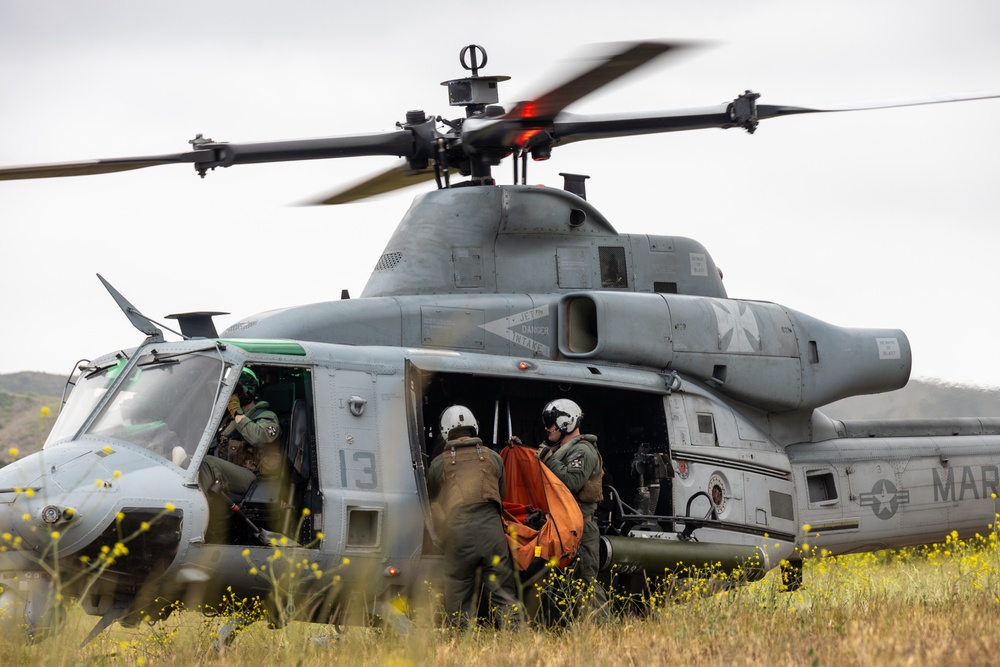
U.S. Marines with Marine Light Attack Helicopter Squadron 169, Marine Aircraft Group 39, 3rd Marine Aircraft Wing prepare a Bambi firefighting bucket during the annual Cory Iverson Wildland Firefighting exercise at the Las Pulgas Lake at Marine Corps Base Camp Pendleton, California, May 1, 2024. The Cory Iverson Wildland Firefighting exercise is an annual event focusing on interagency cooperation between the California Department of Forestry and Fire Protection, San Diego County Sheriff's Department, the Camp Pendleton Fire Department, and the Department of Defense. During the exercise, each entity works together to create an effective, efficient, and well-trained team to respond in the event of wildland fires. Camp Pendleton units and assets routinely work hand-in-hand with local, state and federal partner agencies to provide mutual aid to best protect MCI-West installations and surrounding local communities. (U.S. Marine Corps photo by Lance Cpl. Mhecaela J. Watts)


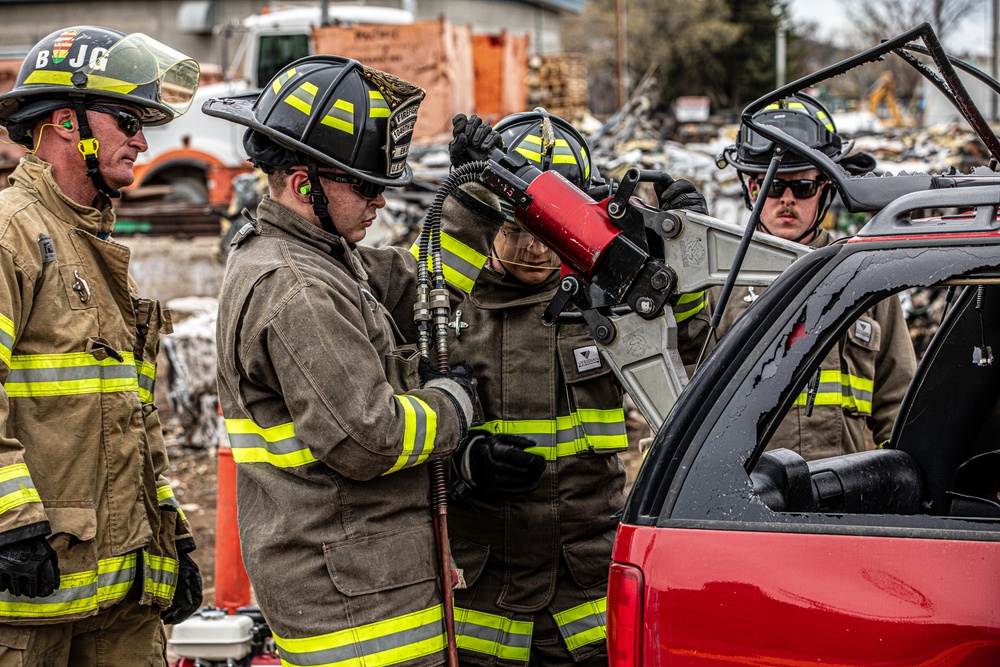
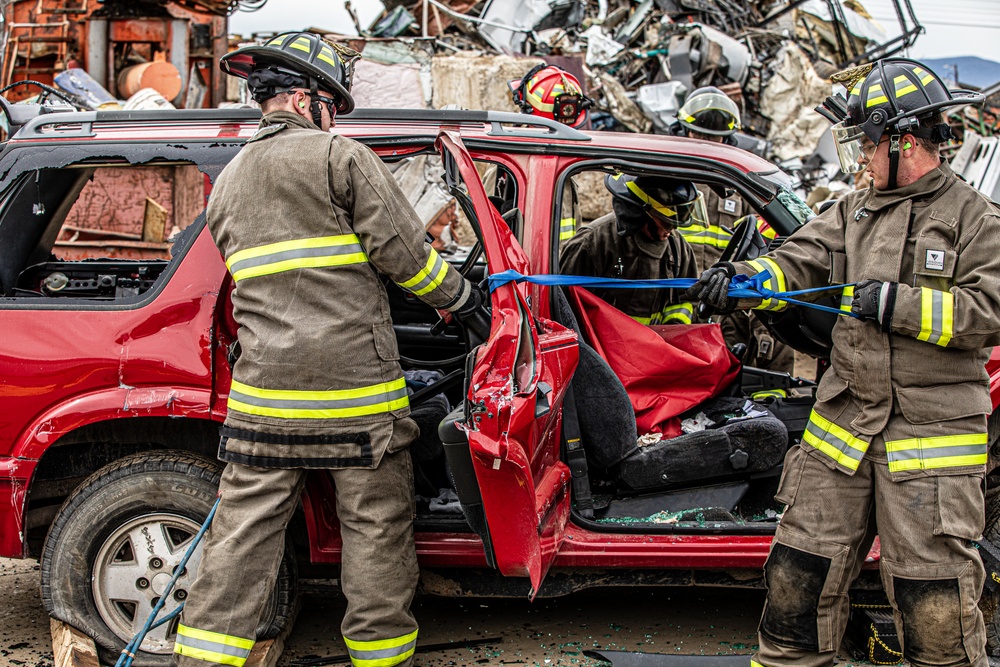
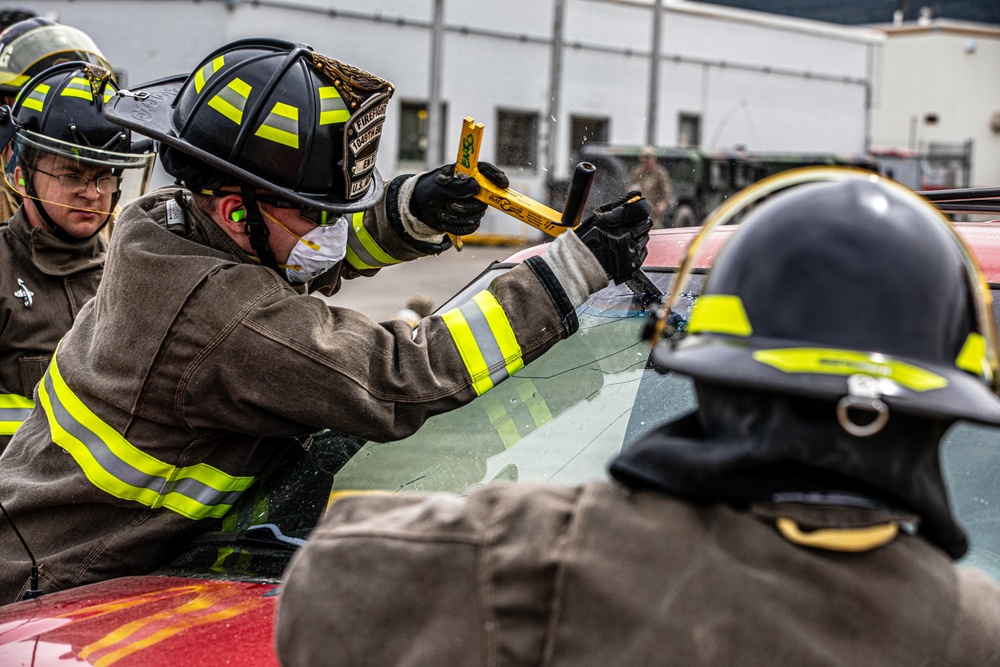
Montana Army National Guard’s 1050th, 1051st, and 1052nd Firefighter Detachments conduct vehicle extrication training.


HELENA, MT, UNITED STATES
05.04.2024
Story by 1st Lt. Gunnar Boose and Sgt. 1st Class Christopher Hoffert
103rd Public Affairs Detachment  

Soldiers from Montana Army National Guard’s 1050th, 1051st, and 1052nd Firefighter Detachments conducted vehicle extrication training on May 4th, 2024 in Helena as part of their annual training requirements. This training includes using tools and equipment to force entry into a vehicle when responding to automotive emergencies. Soldiers trained in a variety of roles to expand their personal readiness to be able to respond anywhere and anytime they are needed across the world. This high level of readiness and training gives theater commanders flexibility to deploy firefighters in support of global operations in both joint and multi-spectrum environments.

Soldiers from Montana Army National Guard’s 1050th, 1051st, and 1052nd Firefighter Detachments conducted vehicle extrication training on May 4th, 2024.

Most Viewed Articles