Wednesday, June 5, 2024

U.S., France and Djibouti Practice Aviation Firefighting

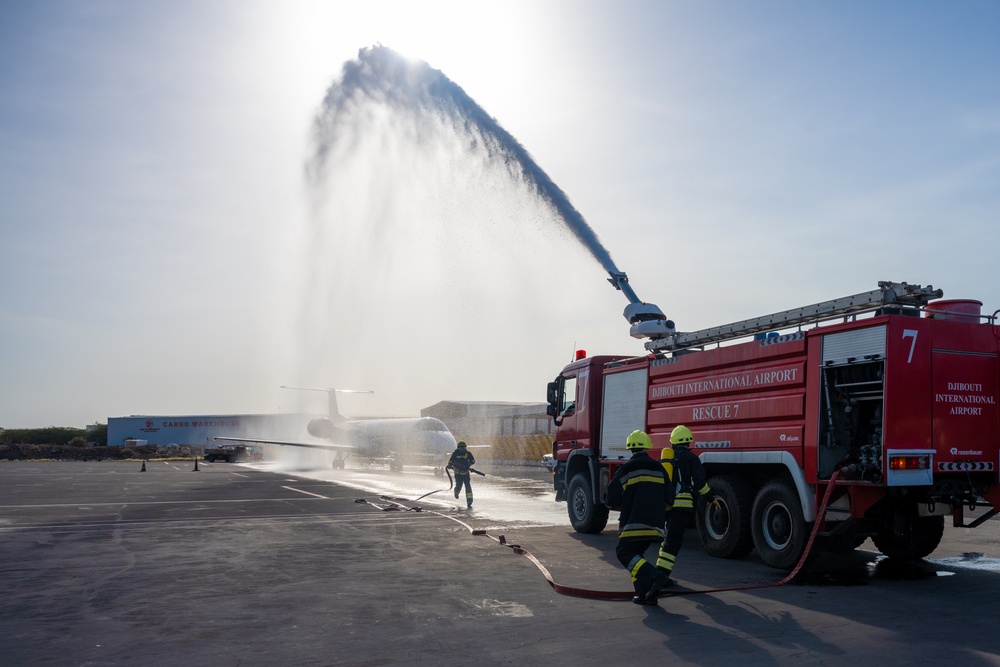
Camp Lemonnier Fire and Emergency Medical Services Department trained with Djiboutian and French first responders during an aviation firefighting (AVFF) aircraft mishap and mass casualty exercise at Djibouti-Ambouli International Airport, Djibouti, May 16, 2024. The exercise was the fourth trilateral training event between U.S., French and Djiboutian first responders. CLDJ is an operational installation that enables U.S., allied and partner nation forces to be where they are needed to ensure security and protect U.S. interests. The installation provides world-class support for service members, transient U.S. assets and 38 local tenant commands. (U.S. Navy photo by Mass Communication Specialist 2nd Class Christopher Thomas)

CAMP LEMONNIER, DJIBOUTI
06.05.2024
Story by Petty Officer 2nd Class Christopher Thomas 
Camp Lemonnier, Djibouti  

CAMP LEMONNIER, Djibouti (June 5, 2024) – Camp Lemonnier Fire and Emergency Medical Services Department trained with Djiboutian and French first responders during an aviation firefighting exercise at Djibouti-Ambouli International Airport, Djibouti, May 16, 2024.

The exercise began with a notification to the U.S., Djiboutian, and French first responders informing them that an aircraft was on fire on the flight line. Djiboutian firefighters arrived at the scene to stabilize the simulated burning aircraft and assumed command of the incident.

Shortly afterward, French firefighters arrived to rescue simulated casualties from the fire and transport them to a triage site. Camp Lemonnier Fire and Emergency Services transported the simulated life-threatening injuries by ambulance for intensive care.

“Practicing these exercises with our partner nations tests the capabilities, limitations and communication of firefighters and first responders during a joint response,” said U.S. Navy Lt. Lucille Lu, Camp Lemonnier emergency management officer.

The exercise also enabled firefighters from the three nations to practice working through language barriers to enhance their collective capabilities.

“The ultimate goal is to work together and saves lives regardless of background, culture, ethnicity or religion,” said Lu.

Providing 24/7 airfield operations – including emergency management -- is part of Camp Lemonnier’s world-class support for service members, U.S. assets and its 38 tenant commands. Deployed squadrons from the Air Force and Marine Corps use Camp Lemonnier’s airfield to perform a variety of missions in the region including transportation of military personnel and supplies throughout the Horn of Africa.

Camp Lemonnier shares the airfield with Djibouti and France. Training to respond to airfield emergencies together enhances joint emergency preparedness and protects U.S., host nation and allied interests.

“This was the fourth trilateral training event between the U.S, Djibouti and France,” said Lu. “I look forward to more joint training opportunities with our host and partner nations.”

Camp Lemonnier is an operational installation that enables U.S., allied, and partner nation forces to be where they are needed to ensure security and protect U.S. interests. The installation provides world-class support for service members, transient U.S. assets and 38 local tenant commands. (U.S. Navy story by Mass Communication Specialist 2nd Class Christopher Thomas)

LEGO Technic Firefighter Aircraft Building Toy, Model Airplane Set 42152, with Authentic Fire Rescue Details, Engineering Fire Plane Fun for Boys, Girls, and Kids Ages

Peruvian, US firefighters train for aircraft fire evacuations

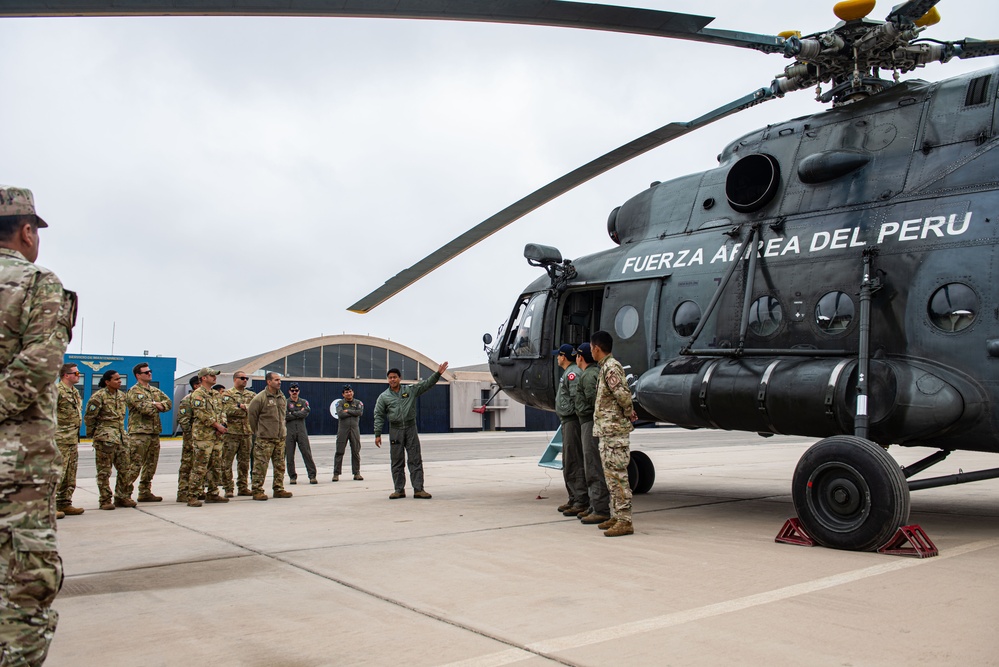
Peruvian and U.S. Airmen engaged in joint training for aircraft structural fire rescue June 3, 2024, in Lima, Peru, as part of the relationship-building exercise Resolute Sentinel 2024.

LIMA, PERU
06.04.2024
Story by Airman 1st Class Sir Wyrick 
12th Air Force (Air Forces Southern)  

Peruvian and U.S. Airmen engaged in joint training for aircraft structural fire rescue June 3, 2024, in Lima, Peru, as part of the relationship-building exercise Resolute Sentinel 2024.

Peruvian Airmen shared techniques and best practices for handling and extinguishing aircraft fires and rescuing trapped personnel with the U.S. Airmen, who likewise shared their tactics. The fire rescue training was coordinated by the Combined Joint Task Force – RS24 and aimed to prepare the U.S. and partner nations for effective emergency response in areas with limited resources and treatment options.

“This exercise was to familiarize ourselves with host nation helicopters and collaborate on the way to most effectively operate with them,” said U.S. Master Sgt. Gustavo Claudio, 103rd Airlift Wing firefighter from the Connecticut Air National Guard. “With the help of Peruvian Airmen, we established a command post and executed a three-man rescue operation with primary and secondary attack lines. We swiftly deployed the crash truck and communicated with the Peruvian pilot regarding the shutdown procedure. The firefighters executed the rescue, successfully retrieving the pilot.”

The Peruvian Air Force operates different airframes compared to the U.S., including the Mil Mi-17 and the Mi-25. This variation in aircraft provided U.S. Airmen with an opportunity to enhance their combat interoperability.

“Back in the U.S., we have a different set of helicopters we own,” said U.S. Air Force Staff Sgt. Vanessa Schoening, 106th Rescue Wing firefighter from New York Air National Guard. “It's nice to learn about and work with various helicopters, and explore the differences. On our Whiskeys back home, we are usually putting out fires and entering on the left side of the aircraft, but here everything is reversed, so getting that hands on training is most beneficial. Also, our Peruvian counterparts are getting to see how we do things, and it's really a feed of information for everybody.”

The Airmen participating in the training staged a fire rescue scenario and jointly walked through the steps of putting out a fire and evacuating trapped airmen.

“The most important thing out of this training is demonstrating how we would execute our procedures,” Schoening said. “Even in situations where we don't have some of our preferred resources, we're still going to train and execute in a way that is still faithful to how we would do it back in the States. This is important because we aren’t just putting out fires, but we are also evacuating Airmen and getting them to the medics. This training will potentially help those emergency responses and help save lives down the line.”

Peruvian service members participating in the training were able to also take away a sense of partnership and collaboration.

“I think it was an excellent training,” said Peruvian Air Force Lt. Col. Mandolo Poblete, CJTF-RS24 deputy of helicopter operations. “We always have a good intent from the U.S. Airmen, and they have the best attitude, approaches and success. Not only do they integrate with our air crews, but also with our firefighters from which they are also sharing their tactics, techniques and procedures. So, it helps a lot to improve the expertise of fire firefighters.”

Through facilitating information sharing and enhancing communication with allied nations, there is optimism that the deterrent force of both the U.S. and its allies will be bolstered.

“During our day, we spent training and relationship building,” said Claudio. “It's a dynamic exchange where we're continuously supporting each other. Undoubtedly, it's mutually beneficial for all parties and will help the overall goal of building a stronger and more collaborative allied nation force.”

Saturday, June 1, 2024

AAPI Heritage Month Spotlight: Al Balderama

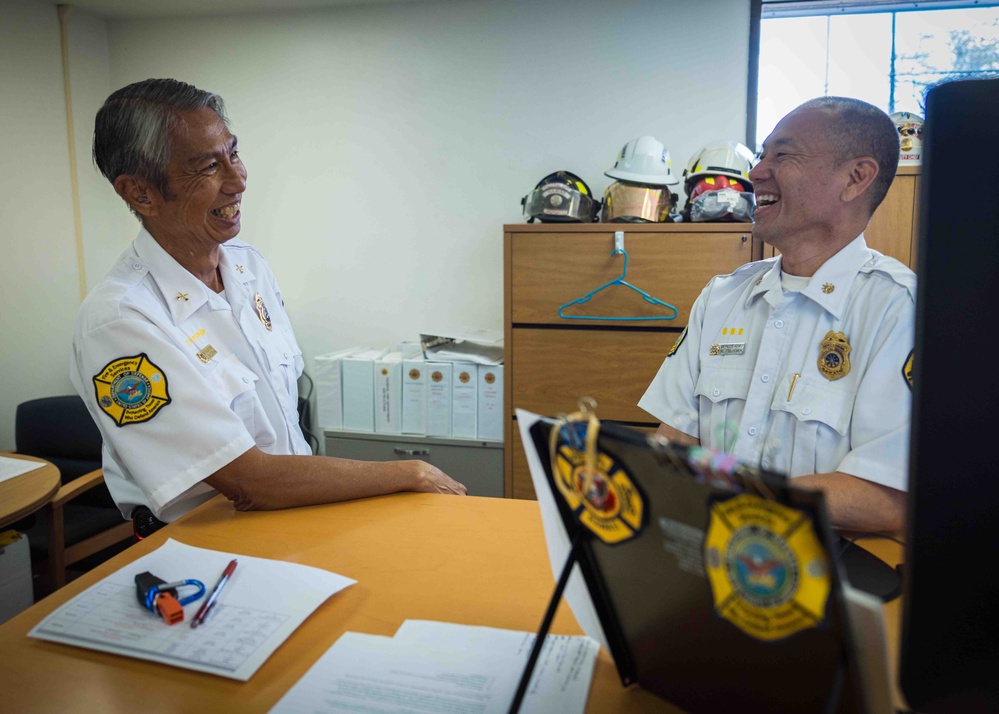
Albert “Al” Balderama is passionate about two things: firefighting and teaching others how to prevent fires. The battalion chief for Commander, Navy Region Hawaii’s (CNRH) Federal Fire (FedFire) department, has been a firefighter for 43 years and takes pride in being a mentor for generations of future firefighters.


http://dlvr.it/T7h0Q8

Wednesday, May 29, 2024

Army trains first responders on crisis intervention


Story by Christopher Hurd May 29, 2024 at 09:33AM WASHINGTON — To help military police and other first responders care for individuals experiencing a crisis, the Special Victims Capabilities Division at the U.S. Army Military Police School developed a crisis intervention team training. "More and more first responders, whether it be military police, firefighters or emergency services, are running into mental health crises that are occurring on installations,” said Nicole Cunningham, Special Victims Capabilities Division chief.
Army trains first responders on crisis intervention

Friday, May 24, 2024

Joint Partner Spotlight: Fire Training through the Eyes of Master Gunnery Sgt. Terrail Dickerson

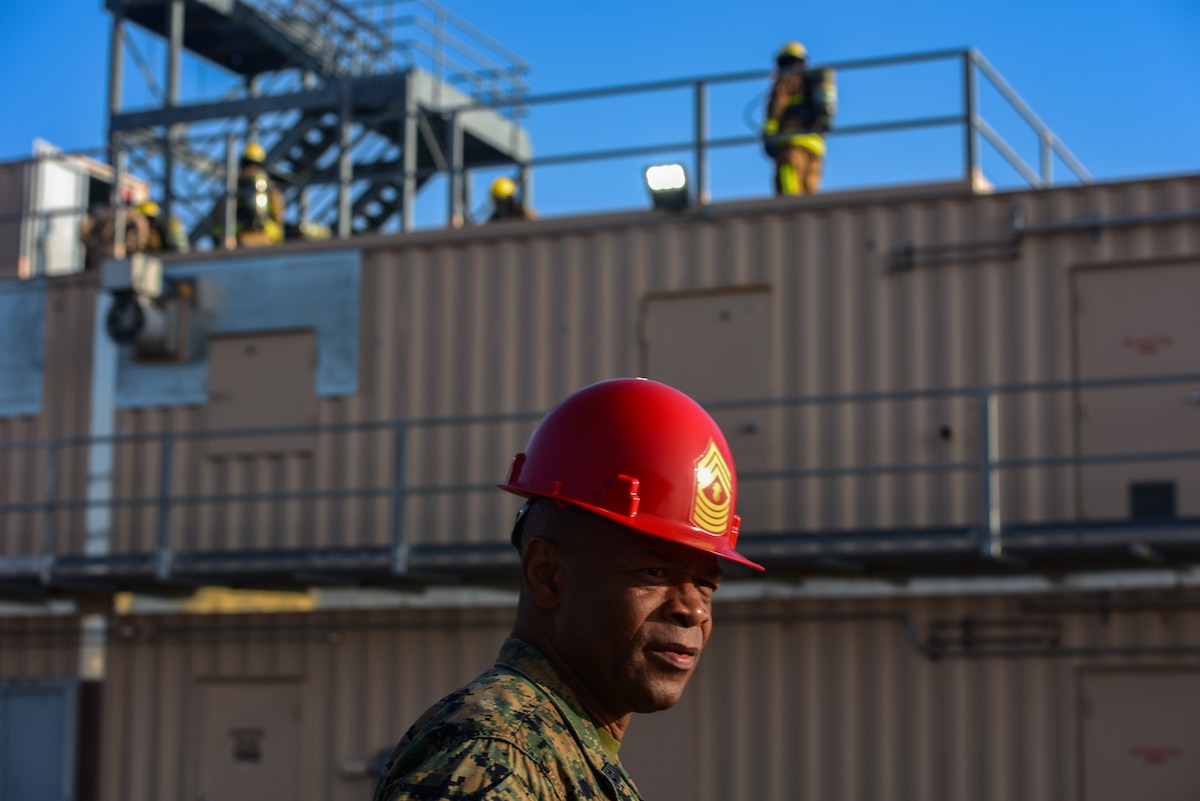
U.S. Marine Corps Master Gunnery Sgt. Terrail Dickerson, Marine Corps Detachment Goodfellow Air Force Base Fire Company senior enlisted advisor, walks the training pad at the Louis F. Garland Department of Defense Fire Academy on Goodfellow AFB, Texas, May 8, 2024. As the SEA, Dickerson has had a direct influence on the training and lives of individual Marines. (U.S. Marine Corps photo by Cpl. Jessica Roeder)

Joint Partner Spotlight: Fire Training through the Eyes of Master Gunnery Sgt. Terrail Dickerson

17th Training Wing Public Affairs

Goodfellow Air Force Base, Texas – As a joint center of excellence, Goodfellow Air Force Base hosts both the signals intelligence schoolhouse and the Louis F. Garland Department of Defense Fire Academy, training every branch of the United States Armed Forces. Among the many exhibits on display at the fire academy is a wealth of history, showcasing gear and photos from various branch-specific fire academies from before the 1995 conversion into a joint training operation.

U.S. Marine Corps Master Gunnery Sgt. Terrail Dickerson, Marine Corps Detachment Goodfellow Air Force Base Fire Company senior enlisted advisor, has dedicated his career to firefighting, and his story is one of growth, perseverance, and leadership. With a career spanning 30 years and assignments across the globe, Dickerson has seen major changes in training and the 7051 career field as a whole.

From his early days as a Marine Corps Junior Reserve Officer Training Corps (MCJROTC) student to his enlistment in the Marine Corps, Dickerson's journey was marked by determination and a strong sense of purpose. After graduating from boot camp in 1994, he attended firefighter training at Naval Air Station Millington in Memphis, Tennessee, where he became a 7051 Crash Fire Rescue Marine.

Dickerson's experiences as a firefighter were not without their challenges. He faced opposition and prejudice as one of the first African American firefighters in his unit, but he overcame these struggles with determination and hard work. His deployments to Afghanistan were marked by adversity, including losing friends and fellow Marines, but he continued to serve honorably, working daily with a strong sense of purpose.

Throughout his career, Dickerson has seen significant changes in firefighting training and equipment. The 9/11 attacks highlighted the need for better equipment and training, leading to a rapid expansion of the firefighting community. Dickerson has witnessed the development of new equipment designed for firefighter safety and efficiency, and he has seen firsthand the impact of these changes on the career field.

As Dickerson approaches retirement, he reflects on the importance of remembering the history of where he comes from. He wants the Marines of today's Aircraft Rescue Firefighting (ARFF) to learn from the past and not forget the sacrifices and struggles of those who have come before them.

In his final piece of advice, Dickerson stressed the importance of leadership philosophy: "Regardless of what your rank is, people are looking at you, and your actions matter to everyone that you come in contact with throughout your career... Be intentional in what you do, and you're going to be successful."

Dickerson's story is one of inspiration and leadership, and his impact will be felt for generations to come. As he leaves the Marine Corps and closes this chapter of his career, he leaves behind a legacy that will be remembered for years to come.


Most Viewed Articles